Tag Archives: PCB manufacturing

Printed Circuit Board Fabrication

Printed Circuit Board Manufacturing vs. PCB Assembly: Understanding the Difference

There Are Differences Between Printed Circuit Board Manufacturing and Printed Circuit Board Assembly, But You Might Be Asking What Are They?
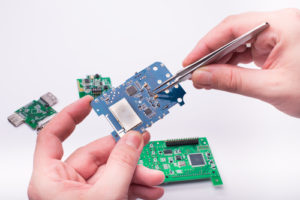
In the world of electronics, the terms Printed Circuit Board (PCB) Manufacturing and PCB Assembly are often used interchangeably—but they actually refer to two distinct processes. Understanding the difference is essential when choosing the right partner for your electronic product development.

At Yun Industrial / ACME PCB Assembly, we specialize in both PCB manufacturing and assembly services, ensuring customers receive complete, end-to-end solutions with unmatched quality and precision.

What Is PCB Manufacturing?

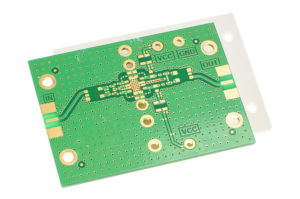
PCB manufacturing is the process of creating the physical printed circuit board from scratch. This involves several intricate steps, including:

  • Designing the board layout using CAD software

  • Creating a PCB prototype to test design accuracy

  • Layering copper and insulating materials to form conductive paths

  • Etching, drilling, and plating to create traces and vias

  • Applying solder masks and silkscreens for protection and labeling

Essentially, PCB manufacturing is about producing the bare board—the foundation that will later hold the electronic components. This stage requires high-precision machinery and engineering expertise to ensure the final board meets performance, safety, and durability standards.

What Is PCB Assembly?

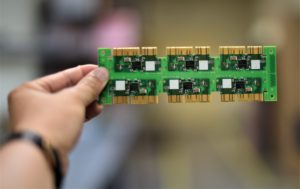
Once the bare board is manufactured, the next step is PCB assembly (PCBA). This is where the circuit board comes to life. The process involves soldering electronic components—such as resistors, capacitors, IC chips, and connectors—onto the PCB according to the design specifications.

PCB assembly can use Surface Mount Technology (SMT), Through-Hole Technology (THT), or a combination of both, depending on the application. This stage requires precise placement, temperature control, and soldering quality to ensure reliable electrical connections and functionality.

ACME PCB Assembly: Your One-Stop PCB Partner

At Yun Industrial ACME PCB Assembly, we provide both manufacturing and assembly services, eliminating the need to work with multiple vendors. As an ISO 9001:2015 certified Electronics Manufacturing Service (EMS) provider and IPC A-610 certified trainer, we uphold the highest industry standards for quality and reliability.

Every PCB we produce meets the strict guidelines of IPC 600, ensuring consistency, durability, and peak performance. Whether you need a prototype or large-scale production, ACME delivers the best value, competitive pricing, and on-time delivery—every time.

Contact us today to learn more about how ACME PCB Assembly can bring your next project from concept to completion.
Contact us today to learn more.

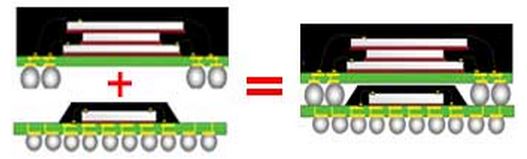
2 BGAs or More vertical installing.

The Rise of Package on Package (PoP) in PCB Assembly

In the ever-evolving landscape of electronics manufacturing, Package on Package (PoP) technology is transforming how circuit boards are designed and assembled. First gaining traction in the early 2000s, PoP is now considered one of the most innovative advances since the introduction of Ball Grid Array (BGA) components in the mid-1990s.

At its core, PoP is an integrated circuit packaging method that vertically stacks two or more BGA packages—typically combining a logic processor and memory component. This space-saving configuration allows for compact, high-performance assemblies ideal for smartphones, wearables, medical devices, and advanced industrial electronics.

The Advantages of PoP Technology

The primary benefit of PoP technology lies in its ability to reduce external pin count through package-level system integration. By stacking chips vertically, engineers can achieve a smaller footprint without sacrificing power or performance. This simplification not only optimizes PCB layout efficiency but also improves overall product reliability by minimizing interconnect lengths and signal interference.

Depending on the configuration, PoP packages can reach a total height as low as 1.4mm, making them perfect for compact devices where every millimeter counts. Additionally, PoP assemblies support independent testing of logic and memory layers, resulting in higher manufacturing yields and easier defect isolation during production.

ACME PCB Assembly: Leading the Way Since 2009

Since 2009, ACME PCB Assembly has been a leader in adopting and refining PoP technology. Utilizing advanced FUJI assembly lines and precise reflow soldering techniques, ACME delivers reliable PoP BGA assemblies for both prototype runs and medium-batch production.

From single-unit builds to production runs of up to 20,000 pieces, ACME’s skilled technicians ensure precise alignment, solder integrity, and quality control at every stage. This allows clients to seamlessly integrate high-density packaging into their next-generation designs—accelerating time to market while maintaining exceptional performance standards.

Whether you’re developing consumer electronics, industrial control systems, or medical devices, PoP technology offers a compact and efficient solution.

Embrace the Future of PCB Assembly

2 BGAs or More vertical installing.

ACME PCB Assembly is your trusted partner for Package on Package assembly, offering experience, precision, and scalability for your most advanced designs. Contact Board Assembly today at 310-715-1898 to learn how PoP can enhance your next project.

pcb-prototype

PCB Design Best Practices: Tips from the Experts

PCB Assembly service in Los AngelesPrinted Circuit Boards (PCBs) are the backbone of modern electronic devices. From smartphones to industrial machinery, PCBs ensure that electrical components are connected and function properly. Whether you’re developing a small prototype or scaling up production, good PCB design practices are critical to success. Here are some expert tips to help you design efficient, high-quality PCBs.

1. Plan Your Layout Strategically

The layout of your PCB can make or break your design. Start by organizing components based on their function and proximity to each other. Grouping similar components minimizes the length of signal paths, which helps reduce electromagnetic interference (EMI) and improves overall signal integrity. Additionally, ensure that your printed circuit boards have enough space to accommodate each component without overcrowding.

Visit our PCB Layout Services to learn how we can assist with optimizing your design layout.

2. Prioritize Signal Integrity

Signal integrity is essential to the reliable performance of your circuit. To maintain high signal quality, route sensitive traces such as clock signals away from high-current traces. Consider using differential pairs for high-speed signals to minimize noise. Proper grounding and shielding techniques can also help reduce noise and improve signal integrity.

Discover how our PCB Assembly Services can help ensure the highest levels of signal integrity in your projects.

3. Optimize Power Distribution

Power distribution is often overlooked but is crucial for maintaining the stability of your PCB. Design a robust power distribution network with ample decoupling capacitors placed near power pins to minimize voltage fluctuations. Use wide traces for power and ground planes to reduce resistance and ensure reliable power delivery.

Learn more about our PCB Power Distribution Solutions that can help you build a reliable power network for your design.

4. Minimize Crosstalk

Crosstalk occurs when signals on nearby traces interfere with each other, leading to performance issues or even complete system failure. To minimize crosstalk, increase the spacing between parallel signal traces or route them perpendicularly across different layers. You can also add ground planes between signal layers to shield traces from interference.

For more expert insights on reducing crosstalk, check out our PCB Expert Advice.

5. Use Design for Manufacturability (DFM) Principles

DFM ensures that your PCB design is optimized for easy and cost-effective manufacturing. This involves following industry standards for trace widths, hole sizes, and pad dimensions, as well as minimizing the use of unnecessary vias. Working closely with your manufacturer during the design phase will help avoid costly errors and delays later in production.

For expert guidance on DFM, contact our team at Board Assembly.

6. Test and Simulate Early and Often

Testing is a critical part of the PCB design process. Use simulation tools to verify the performance of your PCB design before manufacturing. Early testing helps identify potential issues such as signal interference, power integrity problems, or thermal issues, allowing you to make adjustments without incurring costly rework.

Check out our PCB Testing Services to learn more about how we ensure the reliability of your PCBs.

Printed Circuit Board FabricationFollowing these PCB design best practices can lead to more efficient, reliable, and manufacturable printed circuit boards. Whether you’re designing a simple prototype or a complex multi-layer PCB, keeping these tips in mind will help you achieve optimal results.
If you need expert support with your PCB design, assembly, or testing, visit Board Assembly and explore our wide range of services. We’re here to help you bring your designs to life with precision and quality.


Ready to get started? Contact our team at Board Assembly for professional PCB design and manufacturing support.

Continue reading

Flexible Circuit board

Flex Turnkey PCB Assembly

The design rules for flex turnkey PCB assembly is very similar to the design rules for traditional PCBs.  Traditional PCBs and flex flex turnkey PCB assembly share some similarities in the manufacturing process as well.  To start, the flexible circuit board material (typically copper clad Polyimide) is chosen, drilled, plated, photo-imaged, and imprinted just like the conservative PCB process. Next, both PCBs and flex turnkey PCB assemblies involve the panels being baked to remove any moisture from the wet processes.  This next step is where the original PCB and flex turnkey PCB assembly start to differ.  Flex turnkey PCB assemblies go to the cover lay station instead of going to the fuse mask station, as would occur with traditional PCBs.

A flex circuit board cover lay, also known as a cover film, is a lamination process used to summarize and protect any peripheral circuitry of the flex circuit. The cover lay serves the similar function as the solder mask does for conventional PCBs with the dissimilarity being the added component of flexibility. Naturally, the thickness of the cover lay is prepared of 1 mil thick Polyimide with a 1 mil thick, attach adhesive, but other thicknesses are accessible to meet precise design necessities. The Polyimide and adhesive cover lay is laminated using force and heat.

Flexible circuitThe heat allows for simple flow of the adhesive which is needed because it must fill-in any and all gaps among the traces and pads to stop the trapping of air between layers. To a flex turnkey PCB assembly designer this means the cover lay openings for a characteristic 1 oz. The copper plan must be out-sized by 10 mils, which is appreciably bigger than the typical huge of 2-3 mils used on conventional PCB solder masks.
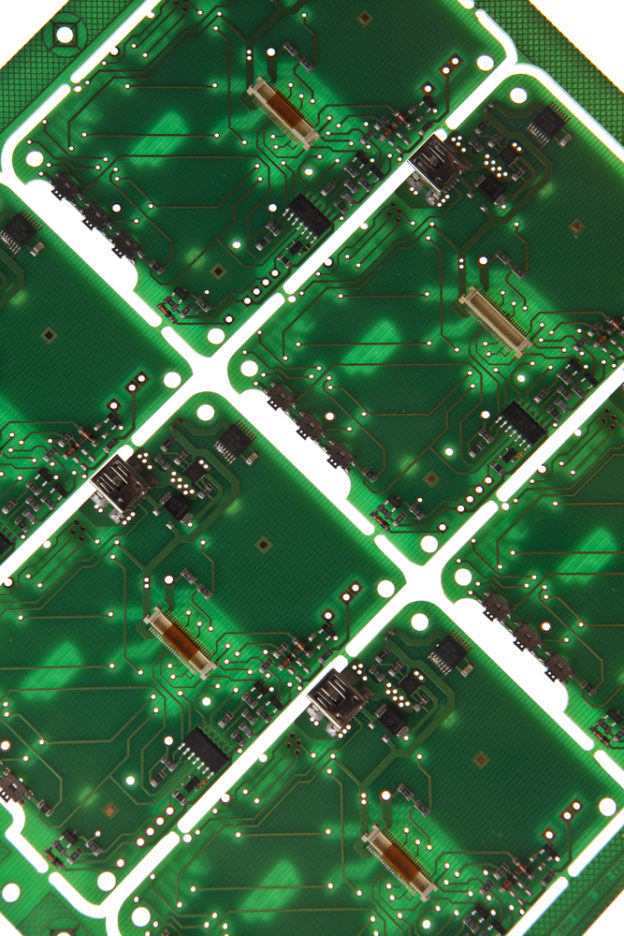
ACME PCB Assembly manufactures flexible turnkey PCB assembly.  We can take your flexible circuit application from concept to reality with our complete design capabilities.  Our talented team is equipped to work in multiple data formats. We have in-house surface-mount technology (SMT) capabilities  and specialize in turnkey assembly applications.

ACME PCB Assembly will work with you for all of your flexible circuit board needs. We are committed to not only customer satisfaction, but exceeding our customer’s expectations. Our adherence to quality standards is a part of what makes our boards superior to other suppliers.

We provide a complete suite of PCB Assembly Services, including rework and modification, BGA, SMT, Turnkey, Thru-Hole, Lead Free, and Prototype assembly, plus an extensive line of add-on services, such as Injection Molding and Metal Work & Finishing.

Call us today with any questions 1- 310-715-1898  (Sales Extension 210) (Purchasing Extension 160)


Printed Circuit Board Fabrication

Top Benefits of Using High-Quality PCBs in Your Projects

In today’s fast-paced technology landscape, using high-quality PCBs in your projects is essential for success. Printed circuit boards form the backbone of countless devices, from smartphones to industrial machines, and their performance can make or break your innovation. Ensuring that the printed circuit boards you select meet rigorous standards and are produced under stringent quality control measures is key to delivering reliable, durable, and efficient products.

Printed Circuit Board FabricationWhen working on any tech-driven project, it’s crucial to focus on the longevity and performance of your components. High-quality PCBs offer enhanced reliability, reducing the likelihood of malfunction or failure in the field. This is especially important in industries where downtime can result in costly delays or safety hazards. By sourcing printed circuit boards from a trusted provider like Board Assembly, you ensure that each PCB is meticulously inspected and tested, guaranteeing that it can withstand even the most challenging environments.

Another critical advantage of using high-quality PCBs is their ability to handle complex circuitry while maintaining efficiency. Whether your project involves compact devices or large-scale applications, well-designed printed circuit boards allow for optimal layout, minimizing noise and interference while maximizing performance. Quality control throughout the production process ensures that each board is built to precise specifications, eliminating errors and inconsistencies that could otherwise impact functionality.

Beyond functionality, investing in high-quality PCBs also enhances the overall reputation of your product. By delivering a reliable, robust solution to your customers, you establish trust and credibility, setting your business apart from competitors who may cut corners by using inferior components. The importance of partnering with a company like Board Assembly that prioritizes quality control cannot be overstated.

In conclusion, using high-quality PCBs in your projects isn’t just a technical requirement—it’s a strategic move to ensure long-term success and market differentiation. If you’re looking to integrate printed circuit boards that are built to last, perform reliably, and meet the highest standards, visit Board Assembly today to explore how their expertise and commitment to excellence can elevate your next project.