Tag Archives: printed circuit boards

pcb-prototype

PCB Design Best Practices: Tips from the Experts

PCB Assembly service in Los AngelesPrinted Circuit Boards (PCBs) are the backbone of modern electronic devices. From smartphones to industrial machinery, PCBs ensure that electrical components are connected and function properly. Whether you’re developing a small prototype or scaling up production, good PCB design practices are critical to success. Here are some expert tips to help you design efficient, high-quality PCBs.

1. Plan Your Layout Strategically

The layout of your PCB can make or break your design. Start by organizing components based on their function and proximity to each other. Grouping similar components minimizes the length of signal paths, which helps reduce electromagnetic interference (EMI) and improves overall signal integrity. Additionally, ensure that your printed circuit boards have enough space to accommodate each component without overcrowding.

Visit our PCB Layout Services to learn how we can assist with optimizing your design layout.

2. Prioritize Signal Integrity

Signal integrity is essential to the reliable performance of your circuit. To maintain high signal quality, route sensitive traces such as clock signals away from high-current traces. Consider using differential pairs for high-speed signals to minimize noise. Proper grounding and shielding techniques can also help reduce noise and improve signal integrity.

Discover how our PCB Assembly Services can help ensure the highest levels of signal integrity in your projects.

3. Optimize Power Distribution

Power distribution is often overlooked but is crucial for maintaining the stability of your PCB. Design a robust power distribution network with ample decoupling capacitors placed near power pins to minimize voltage fluctuations. Use wide traces for power and ground planes to reduce resistance and ensure reliable power delivery.

Learn more about our PCB Power Distribution Solutions that can help you build a reliable power network for your design.

4. Minimize Crosstalk

Crosstalk occurs when signals on nearby traces interfere with each other, leading to performance issues or even complete system failure. To minimize crosstalk, increase the spacing between parallel signal traces or route them perpendicularly across different layers. You can also add ground planes between signal layers to shield traces from interference.

For more expert insights on reducing crosstalk, check out our PCB Expert Advice.

5. Use Design for Manufacturability (DFM) Principles

DFM ensures that your PCB design is optimized for easy and cost-effective manufacturing. This involves following industry standards for trace widths, hole sizes, and pad dimensions, as well as minimizing the use of unnecessary vias. Working closely with your manufacturer during the design phase will help avoid costly errors and delays later in production.

For expert guidance on DFM, contact our team at Board Assembly.

6. Test and Simulate Early and Often

Testing is a critical part of the PCB design process. Use simulation tools to verify the performance of your PCB design before manufacturing. Early testing helps identify potential issues such as signal interference, power integrity problems, or thermal issues, allowing you to make adjustments without incurring costly rework.

Check out our PCB Testing Services to learn more about how we ensure the reliability of your PCBs.
Printed Circuit Board FabricationFollowing these PCB design best practices can lead to more efficient, reliable, and manufacturable printed circuit boards. Whether you’re designing a simple prototype or a complex multi-layer PCB, keeping these tips in mind will help you achieve optimal results.

If you need expert support with your PCB design, assembly, or testing, visit Board Assembly and explore our wide range of services. We’re here to help you bring your designs to life with precision and quality.

Ready to get started? Contact our team at Board Assembly for professional PCB design and manufacturing support.
PCB Fabrication and Assembly

Understanding Tin Whiskers and Their Impact on Printed Circuit Boards

Reliability is one of the most important considerations in electronics manufacturing, especially for products used in automotive systems, aerospace, medical devices, industrial equipment, and telecommunications. Even the smallest manufacturing defect can lead to equipment failure, costly repairs, or safety concerns. One of the lesser-known but significant reliability challenges affecting printed circuit boards (PCBs) is the formation of tin whiskers.

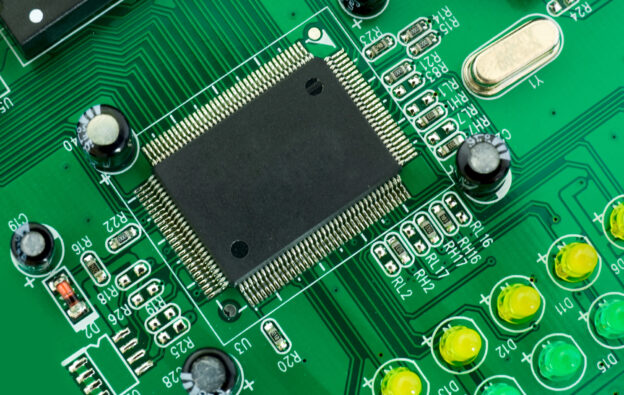
Tin whiskers are microscopic, hair-like metallic filaments that can grow from surfaces coated with tin. Although these tiny structures are often only a few millimeters long, they can create electrical shorts, disrupt sensitive electronics, and reduce the long-term reliability of printed circuit boards. As electronic devices become smaller and more densely populated with components, managing tin whisker growth has become increasingly important for manufacturers.

What Are Tin Whiskers?

rework your pcbTin whiskers are naturally occurring crystalline structures that grow from pure tin finishes used on electronic components and printed circuit boards. Unlike loose metal debris or contamination, whiskers grow directly from the tin surface over time.
While tin whiskers have been studied for decades, they became a larger concern after the electronics industry transitioned toward lead-free manufacturing to comply with environmental regulations such as the Restriction of Hazardous Substances (RoHS) Directive. Since lead previously helped suppress whisker formation, manufacturers have had to develop new methods for minimizing whisker growth while maintaining environmentally friendly production practices.

Why Are Tin Whiskers a Concern?

Although tin whiskers are extremely small, they can have serious consequences. If a whisker grows long enough to bridge two conductive points on a printed circuit board, it can create an unintended electrical connection.

Potential problems include:

  • Electrical short circuits
  • Equipment malfunctions
  • Signal interference
  • Reduced product reliability
  • Unexpected system failures
  • Increased maintenance costs

These failures are particularly concerning in high-reliability industries where electronic systems must operate continuously for many years with minimal risk of failure.

What Causes Tin Whiskers to Form?

Researchers have identified several factors that contribute to tin whisker growth. While the exact mechanisms remain complex, whiskers generally develop when compressive stress builds within the tin plating.

Several conditions may increase the likelihood of whisker formation:

  • Growth of intermetallic compounds between copper and tin
  • Thermal expansion differences between materials
  • Mechanical stress from connectors or mounting hardware
  • Long-term environmental exposure
  • Corrosion caused by moisture or humidity
  • Variations in plating quality
  • Improper manufacturing processes

These stresses can gradually force tin atoms outward, creating the thin filament structures known as whiskers.

Why Proper Tin Plating Matters

The quality of the tin finish plays a major role in reducing whisker formation. Modern PCB manufacturers carefully control plating processes to produce consistent coatings that minimize internal stress and improve long-term reliability.

Several manufacturing variables influence plating quality, including:

  • Electrolyte chemistry
  • Current density
  • Bath temperature
  • Agitation
  • Plating thickness
  • Surface preparation
  • Equipment maintenance
  • Process consistency

Carefully controlling these variables helps manufacturers produce higher-quality printed circuit boards with improved resistance to whisker growth.

Preventing Tin Whisker Growth

Completely eliminating tin whiskers is difficult, but manufacturers can significantly reduce the risk by following proven engineering and quality control practices.

Common prevention methods include:

  • Optimizing plating processes
  • Using qualified plating suppliers
  • Maintaining strict process controls
  • Selecting appropriate tin finishes
  • Monitoring plating bath conditions
  • Performing reliability testing
  • Conducting environmental stress testing
  • Following IPC manufacturing standards

Many manufacturers also evaluate new materials and plating technologies that reduce internal stress while maintaining RoHS compliance.

Why Manufacturing Quality Is Critical

Preventing tin whiskers begins long before final PCB assembly. High-quality manufacturing processes, experienced technicians, and rigorous quality control all contribute to producing reliable printed circuit boards that perform consistently throughout their service life.

At YIC Assm, quality is integrated into every stage of PCB fabrication and assembly. From material selection and component sourcing to precision assembly and inspection, every process is designed to deliver dependable electronic products that meet demanding industry requirements.

Our manufacturing capabilities include advanced PCB assembly, Surface Mount Technology (SMT), through-hole assembly, prototype production, turnkey manufacturing, and comprehensive quality assurance procedures that help customers achieve long-term product reliability.

Partner with an Experienced PCB Manufacturing Team

As electronic devices become more compact and complex, manufacturing quality becomes increasingly important. Understanding issues like tin whiskers allows engineers and manufacturers to make informed decisions that improve product performance and reduce long-term reliability risks.

Whether your project involves automotive electronics, industrial controls, medical devices, telecommunications equipment, or consumer products, selecting an experienced PCB manufacturing partner helps ensure your printed circuit boards are built to meet the highest standards of quality and reliability.

Frequently Asked Question

How can YIC Assm help improve the reliability of printed circuit boards?

YIC Assm provides high-quality PCB fabrication, PCB assembly, SMT assembly, prototype manufacturing, turnkey electronics manufacturing, and rigorous quality control processes designed to produce reliable printed circuit boards for demanding applications. Learn more by visiting our PCB Assembly Services page or contact our team to discuss your next project.

rework your pcb

How Automotive PCB Assembly Powers Modern Vehicle Technology

The automotive industry has undergone a remarkable transformation over the past decade. Today’s vehicles are no longer purely mechanical machines—they are sophisticated electronic systems equipped with advanced safety technologies, intelligent connectivity, powerful infotainment systems, and increasingly complex electric drivetrains. At the center of these innovations are Printed Circuit Boards (PCBs), which serve as the foundation for virtually every electronic function inside a modern vehicle.

From traditional gasoline-powered automobiles to hybrid and fully electric vehicles (EVs), automotive PCB assembly plays a critical role in ensuring reliable performance, safety, and efficiency. At YIC Assm, we specialize in providing high-quality PCB assembly solutions designed to meet the demanding requirements of the automotive industry.

The Growing Importance of Automotive PCB Assembly

Every modern vehicle contains dozens—and often hundreds—of electronic control units (ECUs) that communicate continuously to monitor performance, improve safety, and optimize fuel efficiency. Each ECU depends on precision-manufactured printed circuit boards to process information and control essential vehicle functions.

Unlike consumer electronics, automotive PCBs must perform reliably under extremely challenging conditions. They are exposed to constant vibration, wide temperature fluctuations, moisture, dust, chemicals, and electrical interference. Because many automotive systems directly affect vehicle safety, every PCB must meet strict quality and reliability standards throughout its operational life.

Improving Vehicle Safety Through Advanced Electronics

One of the most important applications of automotive PCBs is supporting advanced vehicle safety systems. Features that drivers now expect as standard equipment rely on complex electronic circuitry operating flawlessly in real time.

Automotive PCB assemblies are used in:

  • Advanced Driver Assistance Systems (ADAS)
  • Anti-lock Braking Systems (ABS)
  • Electronic Stability Control (ESC)
  • Airbag control modules
  • Tire pressure monitoring systems
  • Blind spot detection
  • Lane departure warning systems
  • Collision avoidance technology

These systems process information from multiple sensors simultaneously, helping drivers avoid accidents while protecting passengers when collisions occur. Reliable PCB assembly ensures these life-saving technologies function exactly as designed.

Powering Modern Infotainment Systems

pcb-fabrication-and-assembly-near-meToday’s drivers expect far more than a basic radio. Modern infotainment systems provide navigation, smartphone integration, Bluetooth connectivity, voice recognition, streaming media, backup camera displays, and touchscreen controls.
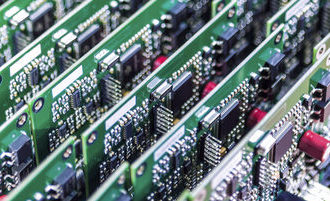
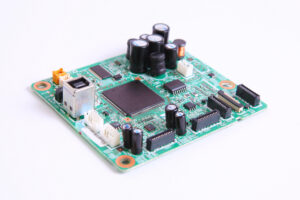
These sophisticated systems require high-performance PCB assemblies capable of processing large amounts of data while maintaining stable power distribution and dependable operation.

At YIC Assm, we manufacture PCB assemblies that support high-speed communication, signal integrity, and efficient power management, helping automakers deliver seamless in-vehicle experiences.

Supporting Electric and Hybrid Vehicles

As electric vehicle adoption continues to grow worldwide, automotive electronics have become even more critical. Electric vehicles depend on numerous interconnected electronic systems to maximize performance, battery life, and driving range.

PCB assemblies play an essential role in:

  • Battery Management Systems (BMS)
  • Charging systems
  • Power distribution
  • Motor controllers
  • Inverters
  • DC-to-DC converters
  • Thermal management systems

High-quality PCB manufacturing helps improve energy efficiency while ensuring safe operation of high-voltage electrical systems.

Enabling Connected and Smart Vehicles

Connected vehicle technology is rapidly changing how drivers interact with their automobiles. Internet of Things (IoT) integration allows vehicles to communicate with mobile devices, cloud platforms, navigation systems, and even other vehicles.

PCB assemblies support technologies including:

  • GPS navigation
  • Wireless communication
  • Vehicle diagnostics
  • Remote software updates
  • Telematics
  • Fleet management
  • Vehicle-to-Vehicle (V2V) communication
  • Vehicle-to-Infrastructure (V2I) communication

As connected vehicles become more advanced, reliable PCB assembly becomes increasingly important for maintaining dependable communication and system performance.

Why Manufacturers Choose YIC Assm

Automotive manufacturers require PCB assembly partners capable of consistently producing reliable products while meeting demanding quality standards and production schedules.

YIC Assm provides customized PCB assembly solutions tailored to each customer’s unique application. Whether supporting prototype development or full production, our experienced engineering and manufacturing teams work closely with customers throughout every stage of the project.

Our capabilities include:

  • Surface Mount Technology (SMT) assembly
  • Through-hole PCB assembly
  • Mixed technology assembly
  • Prototype PCB assembly
  • Turnkey PCB assembly
  • Component sourcing
  • Functional testing
  • Quality inspection
  • Medium-volume production

By combining advanced manufacturing equipment with experienced technicians and rigorous quality control procedures, we consistently deliver PCB assemblies that meet the performance expectations of today’s automotive industry.

Quality You Can Trust

Automotive electronics demand exceptional reliability. Every PCB assembly must perform consistently under harsh environmental conditions for many years of continuous operation.

At YIC Assm, quality is built into every phase of production. Our manufacturing processes utilize advanced inspection systems, precision assembly equipment, and comprehensive quality assurance procedures to ensure every completed assembly meets strict industry standards.

Our commitment to quality helps customers reduce defects, improve reliability, and shorten time to market.

Partner with an Experienced Automotive PCB Assembly Provider

As vehicle technology continues evolving toward greater automation, electrification, and connectivity, dependable PCB assembly becomes increasingly essential. Choosing an experienced manufacturing partner helps ensure every electronic system performs reliably throughout the life of the vehicle.

YIC Assm delivers customized automotive PCB assembly solutions backed by advanced manufacturing capabilities, responsive customer service, and a commitment to quality. Whether your project involves advanced safety systems, electric vehicle electronics, infotainment technology, or connected vehicle platforms, our team is ready to help bring your designs into production.

Frequently Asked Question

What industries does YIC Assm provide PCB assembly services for?

YIC Assm serves a wide range of industries beyond automotive manufacturing, including medical devices, industrial controls, telecommunications, aerospace, consumer electronics, and commercial equipment. Learn more about our complete PCB assembly capabilities by visiting our PCB Assembly Services page and discover how our experienced team can support your next electronics manufacturing project.

Printed Circuit Boards

The Benefits of Working with a Full-Service PCB Assembly Partner

Choosing the right manufacturing partner can make the difference between a successful product launch and costly production delays. Many companies work with separate vendors for PCB fabrication, prototype development, component sourcing, and final assembly, but consolidating these services with a full-service PCB assembly provider can significantly improve efficiency, quality, and overall project management.

A full-service PCB assembly partner offers expertise throughout the entire manufacturing process. Instead of coordinating multiple suppliers, businesses can rely on one experienced team to oversee everything from design review and prototype builds to fabrication, assembly, testing, and production. This streamlined approach reduces communication errors and helps keep projects on schedule.

High quality pcbOne of the biggest advantages is improved consistency. When fabrication and assembly are handled by the same provider, there is greater control over quality standards and manufacturing processes. Engineers and production teams can work together to identify potential issues early, minimizing defects and reducing the likelihood of expensive redesigns.
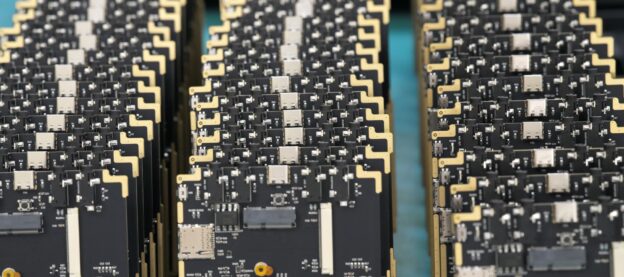
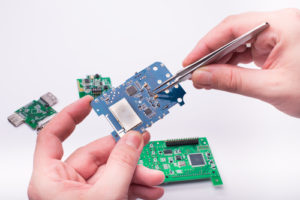
Time savings are another important benefit. Managing multiple vendors often requires additional meetings, shipping logistics, and troubleshooting between suppliers. A single-source manufacturing partner eliminates much of this complexity, allowing products to move more quickly from concept to market.

Full-service providers also offer valuable engineering support. Design for Manufacturability (DFM) reviews help ensure that printed circuit boards can be produced efficiently while maintaining reliability and performance. Early feedback on layout, materials, and component selection can prevent production bottlenecks and lower manufacturing costs.

Scalability is equally important for growing businesses. A company may begin with a handful of prototypes but later require low-volume or high-volume production. Working with the same manufacturing partner throughout the product lifecycle provides continuity and avoids the need to onboard new suppliers as demand increases.

Quality assurance is another area where integrated services provide an advantage. Inspection procedures such as automated optical inspection (AOI), functional testing, and process verification help ensure every assembled board meets customer specifications. Centralized quality control also makes documentation and traceability easier to manage.

Board Assembly supports customers through every stage of electronics manufacturing with comprehensive services available through its PCB assembly solutions. Companies can begin with prototype PCB assembly to validate designs before moving into production, while integrated PCB fabrication capabilities simplify supply chain management and reduce lead times. For products requiring enhanced durability, specialized through-hole assembly services provide dependable performance for demanding applications.

As electronic products become increasingly sophisticated, partnering with a manufacturer that offers end-to-end capabilities can improve collaboration, reduce risk, and accelerate innovation. Whether developing industrial equipment, medical devices, telecommunications hardware, or consumer electronics, a full-service PCB assembly provider delivers the expertise and manufacturing support needed for long-term success.

Printed Circuit Board Fabrication

Printed Circuit Board Manufacturing vs. PCB Assembly: Understanding the Difference

There Are Differences Between Printed Circuit Board Manufacturing and Printed Circuit Board Assembly, But You Might Be Asking What Are They?

In the world of electronics, the terms Printed Circuit Board (PCB) Manufacturing and PCB Assembly are often used interchangeably—but they actually refer to two distinct processes. Understanding the difference is essential when choosing the right partner for your electronic product development.

At Yun Industrial / ACME PCB Assembly, we specialize in both PCB manufacturing and assembly services, ensuring customers receive complete, end-to-end solutions with unmatched quality and precision.

What Is PCB Manufacturing?

PCB manufacturing is the process of creating the physical printed circuit board from scratch. This involves several intricate steps, including:

  • Designing the board layout using CAD software

  • Creating a PCB prototype to test design accuracy

  • Layering copper and insulating materials to form conductive paths

  • Etching, drilling, and plating to create traces and vias

  • Applying solder masks and silkscreens for protection and labeling

Essentially, PCB manufacturing is about producing the bare board—the foundation that will later hold the electronic components. This stage requires high-precision machinery and engineering expertise to ensure the final board meets performance, safety, and durability standards.

What Is PCB Assembly?

Once the bare board is manufactured, the next step is PCB assembly (PCBA). This is where the circuit board comes to life. The process involves soldering electronic components—such as resistors, capacitors, IC chips, and connectors—onto the PCB according to the design specifications.

PCB assembly can use Surface Mount Technology (SMT), Through-Hole Technology (THT), or a combination of both, depending on the application. This stage requires precise placement, temperature control, and soldering quality to ensure reliable electrical connections and functionality.

ACME PCB Assembly: Your One-Stop PCB Partner

At Yun Industrial ACME PCB Assembly, we provide both manufacturing and assembly services, eliminating the need to work with multiple vendors. As an ISO 9001:2015 certified Electronics Manufacturing Service (EMS) provider and IPC A-610 certified trainer, we uphold the highest industry standards for quality and reliability.

Every PCB we produce meets the strict guidelines of IPC 600, ensuring consistency, durability, and peak performance. Whether you need a prototype or large-scale production, ACME delivers the best value, competitive pricing, and on-time delivery—every time.

Contact us today to learn more about how ACME PCB Assembly can bring your next project from concept to completion.

Contact us today to learn more.