Cable Assemblies include one or more wires that run together in a single sleeve with a connector or plug on each end. Cable assemblies could be groups of wires or cables bundled together. They are wrapped in a thermoplastic or vinyl sleeve, cable assemblies are ideal for directing groups of wires and cables around obstacles.
Cable assemblies are designed to perform specific functions that is determined by the plugs, terminals, and connectors that are found on each end. They are used in most electronic applications, everything from flat panel displays to the automotive electronic system to integrated cockpit systems to simple LED lighted clothing, costumes and accessories.
What Do You Use Cable Assemblies For?
Cable assemblies intersect or interconnect different circuits or electrical paths, so they work together to transmit signals or power. They usually only have two ends to connect point A to point B.
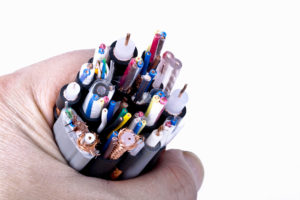
For example, ethernet cable assemblies are designed to provide service supporting bandwidth speeds up to 10 Gigabit Ethernet, such as large data centers, military field units, and medical facilities. For those applications that require a lightweight, smaller assembly that can transmit clearly and rapidly over great distances, support greater bandwidths, with high voltage isolation, then fiber optic cable assemblies would meet those needs. A few of the industries that utilize fiber optic cable assemblies, include aerospace, automotive, industrial, medical, and military applications.
Cable harnesses are more complex in nature and may require different machinery and tools to be consistent with production. Creating slits and windows in cables demand specialized equipment to handle the various conductors within the insulation. We
Located in Carson, California, ACME PCB Assembly utilizes top of the line technology from Schleuniger to perfectly cut, strip, and process any wire or cable you need. After 25 plus years in the business, ACME PCB Assembly has the experience to be your contract manufacturer for cable & wire harness projects. As an IPC-A-610 certified assembler with a certified trainer in house, you can be rest assured the cables and wires that come out of ACME will exceed the standards.
cable assemblies, cable harness assembly, cable harness service Los Angeles, cable harness
Printed Circuit Boards (PCBs) are at the heart of modern electronics—but as devices become smaller, more powerful, and more widely used in harsh environments, protecting these sensitive components has become more critical than ever. That’s where conformal coating in PCB protection steps in as a game-changer.
Whether it’s a consumer product exposed to daily wear or a military-grade device deployed in extreme climates, PCBs need an added layer of protection. Conformal coating provides exactly that: a thin, durable film that safeguards electronics from moisture, dust, chemicals, and temperature extremes without compromising performance or size.
What Is Conformal Coating?
Conformal coating is a protective chemical layer applied to the surface of a PCB to create a barrier against environmental contaminants. It’s “conformal” because it conforms to the shape of the board and its components, coating even hard-to-reach areas without needing bulky enclosures.
At Board Assembly, we apply conformal coatings using precise, industry-approved techniques that ensure full coverage without interfering with the function or accessibility of electronic parts.
Why Is Conformal Coating Becoming More Important?
As electronics continue to expand into sectors like automotive, aerospace, defense, and IoT devices, the environments these PCBs operate in are becoming more unpredictable and challenging.
Here are a few key reasons conformal coating is gaining traction:
Moisture & Corrosion Resistance: In humid or marine environments, moisture can cause corrosion, short-circuits, and long-term failure. Conformal coatings seal off the PCB surface, keeping moisture at bay.
Chemical Protection: In industrial settings, exposure to cleaning agents, fuels, or harsh chemicals is common. A conformal coating acts as a shield, preventing chemical damage.
Dust & Debris Protection: For electronics in outdoor or manufacturing environments, dust accumulation can hinder performance. Coatings protect against particulate buildup.
Extended Product Life: By protecting the PCB from environmental damage, conformal coatings significantly increase product reliability and longevity—essential for industries where equipment failure is not an option.
Applications Across Industries
From automotive control units to aerospace avionics, and from wearable medical devices to outdoor smart home systems, conformal coating in PCB protection is now a standard best practice in many industries. As miniaturization and high-performance demands increase, protective coatings are no longer optional—they’re essential.
Why Work With Board Assembly?
At Board Assembly, we offer advanced PCB assembly solutions that include precision-applied conformal coatings to ensure your product performs reliably in any environment. Whether you need protection from moisture, vibration, chemicals, or dust, our team ensures your PCB is ready for real-world conditions.
Want to learn more about how conformal coating can improve your product’s performance and durability? Contact us today to discuss your PCB protection needs.
When it comes to bringing an electronic product to market, every component matters—especially the printed circuit board (PCB). At Board Assembly, we specialize in PCB assembly solutions tailored to meet the unique demands of both small and large volume orders. Whether you’re a startup developing your first prototype or an established manufacturer scaling production, having a trusted assembly partner makes all the difference.
Flexible PCB Assembly for Every Project Size
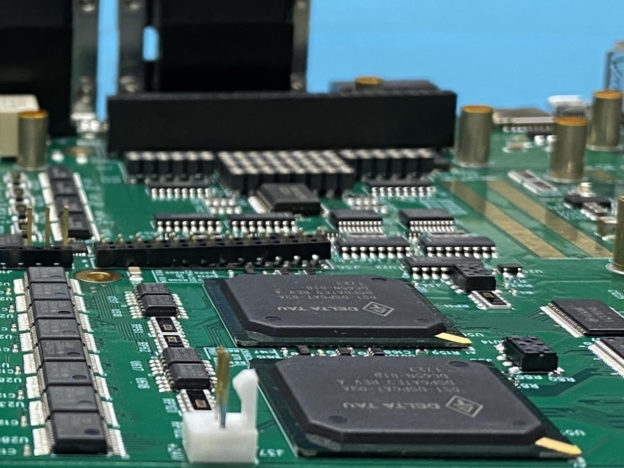
Not all projects are created equal. Some begin with low-volume runs for testing or proof of concept, while others require full-scale manufacturing to meet demand. We understand the need for flexibility. That’s why our facility is equipped to handle both ends of the spectrum—from a handful of boards to thousands—all while maintaining tight quality control and fast turnaround times.
Startups and small businesses benefit from our low minimum order quantities and personalized service. If you need help with your design or component sourcing, our experienced team is here to assist you at every step. For larger businesses and production-scale orders, we offer automated processes, scalable workflows, and strict adherence to IPC standards.
Quality, Consistency, and Support
We don’t just assemble circuit boards—we build reliability into your product. Our advanced equipment and trained technicians ensure each board is assembled with precision. Every order, no matter the size, is subjected to rigorous testing and inspection to meet your performance and durability expectations.
Need surface mount (SMT), through-hole, or mixed technology assembly? We’ve got you covered. Our capabilities include both leaded and RoHS-compliant assembly processes, giving you the freedom to choose what’s best for your application and market.
Your Turnkey Partner
At Board Assembly, we go beyond standard manufacturing. From prototype to production, we offer full turnkey solutions including sourcing, assembly, testing, and packaging. This helps streamline your supply chain and gets your product to market faster.
Visit Board Assembly to learn how our PCB assembly services can support your next project—big or small. Contact us today to get started with a quote or design consultation.
If you grew up taking apart radios, computers, or video game consoles just to see how they worked, you’ve likely studied a printed circuit board (PCB) up close. Among the intricate metallic traces and soldered components, you might have noticed small white letters, numbers, and symbols printed across the board’s surface. These markings aren’t random—they’re part of a critical layer called the PCB silkscreen.
Understanding the PCB Silkscreen Layer
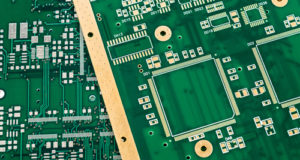
The PCB silkscreen is a printed layer that provides human-readable information on a circuit board. Typically created with special inks, the silkscreen identifies important features such as:
Component reference designators (like R1, C5, U2)
Test points
Warning symbols
Company logos
Part numbers and date codes
Polarity indicators for diodes, LEDs, and capacitors
Most PCB silkscreens are printed in white ink because it contrasts clearly with the traditional green solder mask. However, silkscreen inks can also be black, red, blue, or yellow, depending on the board’s color scheme or specific customer requests.
Why Is the Silkscreen Important?
The silkscreen acts as a visual guide for anyone who assembles, repairs, or tests the PCB. It tells workers how components should be placed and identifies key features to assist in troubleshooting and maintenance. Without a clear silkscreen, identifying the purpose or placement of components could quickly become confusing, leading to costly mistakes or longer assembly times.
Additionally, the silkscreen enhances safety by marking high-voltage areas or other hazards clearly.
How Silkscreens Are Applied
Adding the silkscreen is typically the final step in PCB fabrication, done while the boards are still panelized. The ink used must be carefully chosen to withstand the chemicals and heat involved in soldering and assembly. Once printed, the board moves to the final finishing or routing phase.
There are several methods for applying a silkscreen:
Manual Screen Printing: Traditional, cost-effective for low-volume runs
Direct Legend Printing (DLP): Uses inkjet printers for extremely accurate and fast printing
Each method is selected based on the PCB’s design complexity, production volume, and budget.
Common Mistakes to Avoid in Silkscreen Design
Even experienced PCB designers can make mistakes when preparing the silkscreen layer. Some key things to watch out for:
Avoid printing over pads: Silkscreen ink can interfere with soldering and create defects.
Keep text legible: Fonts should be large enough to read easily, even after solder mask application.
Allow for registration tolerance: Slight shifts during manufacturing mean text and symbols should have enough spacing to stay clear and readable.
A well-designed silkscreen makes the PCB easier to work with and improves overall product quality.
Trust ACME PCB for Quality PCB Manufacturing
At ACME PCB, we take pride in handling every detail of your PCB project—including the silkscreen layer. Our team ensures that every marking is clear, correct, and perfectly aligned, giving you boards that are not only functional but also easier to assemble, maintain, and troubleshoot.
Need a reliable PCB manufacturer that gets the details right? Contact ACME PCB today to get started!
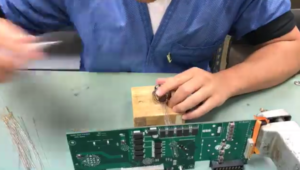
When it comes to producing electronic devices, PCB assembly and box build are two essential processes that play different but complementary roles in bringing products to life. While many people are familiar withPCB assembly — where components are mounted on a printed circuit board — box build assembly takes it a step further by creating the finished product that’s ready for market.
If you’re wondering what separates a box build from PCB assembly, and when you need both services, this guide will break it down in simple terms.
In short, PCB assembly focuses on the brain of the device — the electronic board that powers everything.
Key steps in PCB assembly include:
Solder paste application
Pick and place of components
Reflow soldering or wave soldering
Inspection and testing
PCB assembly is essential for any electronic device but does not complete the final product — that’s where box build comes in.
What Is a Box Build?
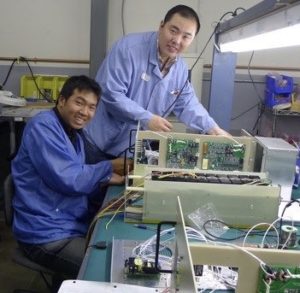
A box build (also known as system integration or electronic box build assembly) involves assembling all the necessary components — including the PCB — into a finished, fully functional product.
Think of box build as the final stage of electronic manufacturing. Once your PCB is assembled, tested, and functioning, box build assembly packages everything into its enclosure, adds wiring, and includes other mechanical and electrical parts.
Box Build vs. PCB Assembly: What’s the Difference?
Feature
PCB Assembly
Box Build Assembly
Focus
Assembling components on a circuit board
Assembling final product including PCB
Includes
Only the electronic board and components
PCB + wiring, housing, connectors, and more
End Result
A working circuit board
Fully assembled, ready-to-use product
Additional Work
No enclosures, no system integration
Full system integration, packaging, labeling
Testing
PCB-level electrical tests
System-level testing to verify total function
When Do You Need Both PCB Assembly and Box Build?
Most finished electronic products require both PCB assembly and box build to be market-ready. If you are producing any of the following, you will likely need both services:
Consumer electronics (smart devices, home gadgets)
Telecommunication devices (routers, communication boxes)
IoT devices (smart sensors, connected devices)
Here’s when both services are essential:
Product Readiness: If you want a product ready for sale or shipment — not just a circuit board — you need box build after PCB assembly.
Complex Wiring Needs: If your device requires wiring, cable assemblies, and mechanical enclosures, a box build is necessary to integrate these parts.
Testing & Compliance: Final system-level testing (functional tests, safety tests) happens during box build, ensuring the product works as intended before it reaches customers.
Why Work with a Partner Who Offers Both?
Choosing a manufacturing partner like Board Assembly that offers both PCB assembly and box build services can save time, reduce costs, and improve quality control. Here’s why:
Streamlined communication: Manage one relationship instead of coordinating between separate vendors.
Faster turnaround: PCB and box build handled under one roof means fewer delays.
Lower costs: Combined services often mean better pricing on components and assembly.
Better quality assurance: One team ensures your product is built and tested according to your specifications.
While PCB assembly focuses on building the electronic board, box build assembly brings all components together into a finished, functional product. Most companies need both services to ensure their devices are ready for customers.
If you’re looking for a reliable partner for box builds and PCB assembly, Board Assembly has the expertise to handle your project from start to finish — simplifying your production process and delivering high-quality results.
Contact Us to Learn More
➡️ Ready to start your next electronic box build or PCB assembly project? Contact Board Assembly today to discuss how we can help streamline your manufacturing and bring your product to life!
 Back Home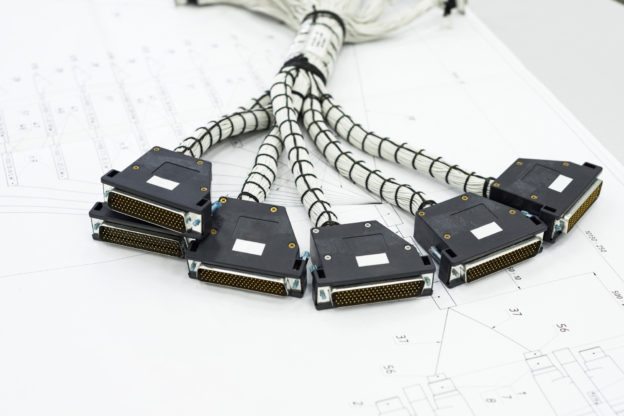
 For example, ethernet cable assemblies are designed to provide service supporting bandwidth speeds up to 10 Gigabit Ethernet, such as large data centers, military field units, and medical facilities. For those applications that require a lightweight, smaller assembly that can transmit clearly and rapidly over great distances, support greater bandwidths, with high voltage isolation, then fiber optic cable assemblies would meet those needs. A few of the industries that utilize fiber optic cable assemblies, include aerospace, automotive, industrial, medical, and military applications.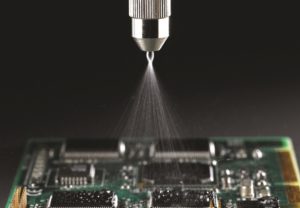
 What Is Conformal Coating?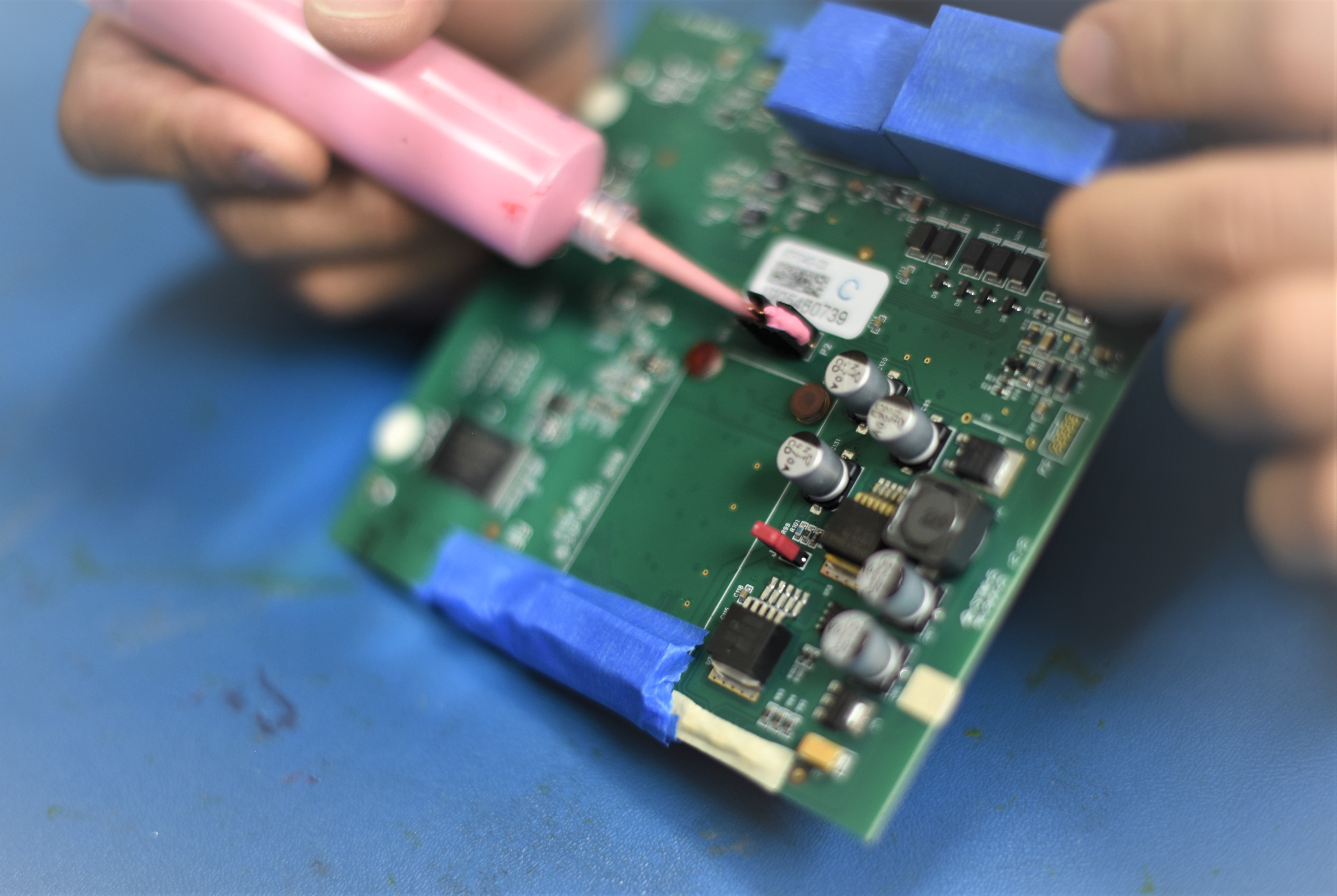
 Flexible PCB Assembly for Every Project Size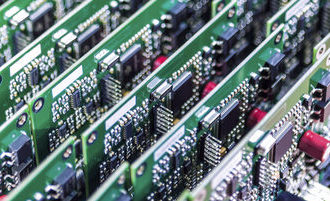
 The
The 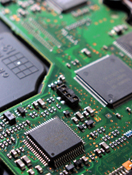 Adding the silkscreen is typically the final step in PCB fabrication, done while the boards are still panelized. The ink used must be carefully chosen to withstand the chemicals and heat involved in soldering and assembly. Once printed, the board moves to the final finishing or routing phase.
 Trust ACME PCB for Quality PCB Manufacturing
 A box build (also known as system integration or
  While
While 


