Tag Archives: PCB reliability

PCB Fabrication and Assembly

Understanding Tin Whiskers and Their Impact on Printed Circuit Boards

Reliability is one of the most important considerations in electronics manufacturing, especially for products used in automotive systems, aerospace, medical devices, industrial equipment, and telecommunications. Even the smallest manufacturing defect can lead to equipment failure, costly repairs, or safety concerns. One of the lesser-known but significant reliability challenges affecting printed circuit boards (PCBs) is the formation of tin whiskers.

Tin whiskers are microscopic, hair-like metallic filaments that can grow from surfaces coated with tin. Although these tiny structures are often only a few millimeters long, they can create electrical shorts, disrupt sensitive electronics, and reduce the long-term reliability of printed circuit boards. As electronic devices become smaller and more densely populated with components, managing tin whisker growth has become increasingly important for manufacturers.

What Are Tin Whiskers?
rework your pcbTin whiskers are naturally occurring crystalline structures that grow from pure tin finishes used on electronic components and printed circuit boards. Unlike loose metal debris or contamination, whiskers grow directly from the tin surface over time.

While tin whiskers have been studied for decades, they became a larger concern after the electronics industry transitioned toward lead-free manufacturing to comply with environmental regulations such as the Restriction of Hazardous Substances (RoHS) Directive. Since lead previously helped suppress whisker formation, manufacturers have had to develop new methods for minimizing whisker growth while maintaining environmentally friendly production practices.

Why Are Tin Whiskers a Concern?

Although tin whiskers are extremely small, they can have serious consequences. If a whisker grows long enough to bridge two conductive points on a printed circuit board, it can create an unintended electrical connection.

Potential problems include:

  • Electrical short circuits
  • Equipment malfunctions
  • Signal interference
  • Reduced product reliability
  • Unexpected system failures
  • Increased maintenance costs

These failures are particularly concerning in high-reliability industries where electronic systems must operate continuously for many years with minimal risk of failure.

What Causes Tin Whiskers to Form?

Researchers have identified several factors that contribute to tin whisker growth. While the exact mechanisms remain complex, whiskers generally develop when compressive stress builds within the tin plating.

Several conditions may increase the likelihood of whisker formation:

  • Growth of intermetallic compounds between copper and tin
  • Thermal expansion differences between materials
  • Mechanical stress from connectors or mounting hardware
  • Long-term environmental exposure
  • Corrosion caused by moisture or humidity
  • Variations in plating quality
  • Improper manufacturing processes

These stresses can gradually force tin atoms outward, creating the thin filament structures known as whiskers.

Why Proper Tin Plating Matters

The quality of the tin finish plays a major role in reducing whisker formation. Modern PCB manufacturers carefully control plating processes to produce consistent coatings that minimize internal stress and improve long-term reliability.

Several manufacturing variables influence plating quality, including:

  • Electrolyte chemistry
  • Current density
  • Bath temperature
  • Agitation
  • Plating thickness
  • Surface preparation
  • Equipment maintenance
  • Process consistency

Carefully controlling these variables helps manufacturers produce higher-quality printed circuit boards with improved resistance to whisker growth.

Preventing Tin Whisker Growth

Completely eliminating tin whiskers is difficult, but manufacturers can significantly reduce the risk by following proven engineering and quality control practices.

Common prevention methods include:

  • Optimizing plating processes
  • Using qualified plating suppliers
  • Maintaining strict process controls
  • Selecting appropriate tin finishes
  • Monitoring plating bath conditions
  • Performing reliability testing
  • Conducting environmental stress testing
  • Following IPC manufacturing standards

Many manufacturers also evaluate new materials and plating technologies that reduce internal stress while maintaining RoHS compliance.

Why Manufacturing Quality Is Critical

Preventing tin whiskers begins long before final PCB assembly. High-quality manufacturing processes, experienced technicians, and rigorous quality control all contribute to producing reliable printed circuit boards that perform consistently throughout their service life.

At YIC Assm, quality is integrated into every stage of PCB fabrication and assembly. From material selection and component sourcing to precision assembly and inspection, every process is designed to deliver dependable electronic products that meet demanding industry requirements.

Our manufacturing capabilities include advanced PCB assembly, Surface Mount Technology (SMT), through-hole assembly, prototype production, turnkey manufacturing, and comprehensive quality assurance procedures that help customers achieve long-term product reliability.

Partner with an Experienced PCB Manufacturing Team

As electronic devices become more compact and complex, manufacturing quality becomes increasingly important. Understanding issues like tin whiskers allows engineers and manufacturers to make informed decisions that improve product performance and reduce long-term reliability risks.

Whether your project involves automotive electronics, industrial controls, medical devices, telecommunications equipment, or consumer products, selecting an experienced PCB manufacturing partner helps ensure your printed circuit boards are built to meet the highest standards of quality and reliability.

Frequently Asked Question

How can YIC Assm help improve the reliability of printed circuit boards?

YIC Assm provides high-quality PCB fabrication, PCB assembly, SMT assembly, prototype manufacturing, turnkey electronics manufacturing, and rigorous quality control processes designed to produce reliable printed circuit boards for demanding applications. Learn more by visiting our PCB Assembly Services page or contact our team to discuss your next project.
conformal coating pcb

Why Conformal Coating Services Are Essential for Long-Term PCB Reliability

In today’s electronics-driven world, protecting printed circuit boards (PCBs) from environmental damage is critical to maintaining long-term performance and reliability. A professional conformal coating service adds an essential layer of protection that helps PCB assemblies withstand moisture, chemicals, dust, salt spray, vibration, and extreme temperature changes. Industries such as aerospace, automotive, medical devices, telecommunications, and industrial automation depend on conformal coating to extend product lifespan and reduce costly failures in the field.

At Board Assembly, our Conformal Coating Service provides a protective polymer film that carefully conforms to the contours of the PCB and its components. This thin but highly durable coating forms a barrier against corrosion, electrical shorts, and environmental contaminants that could otherwise damage sensitive electronics. By sealing and protecting circuitry, conformal coating helps ensure that electronic products continue operating reliably even in challenging environments such as humid climates, manufacturing plants, marine applications, or outdoor installations.

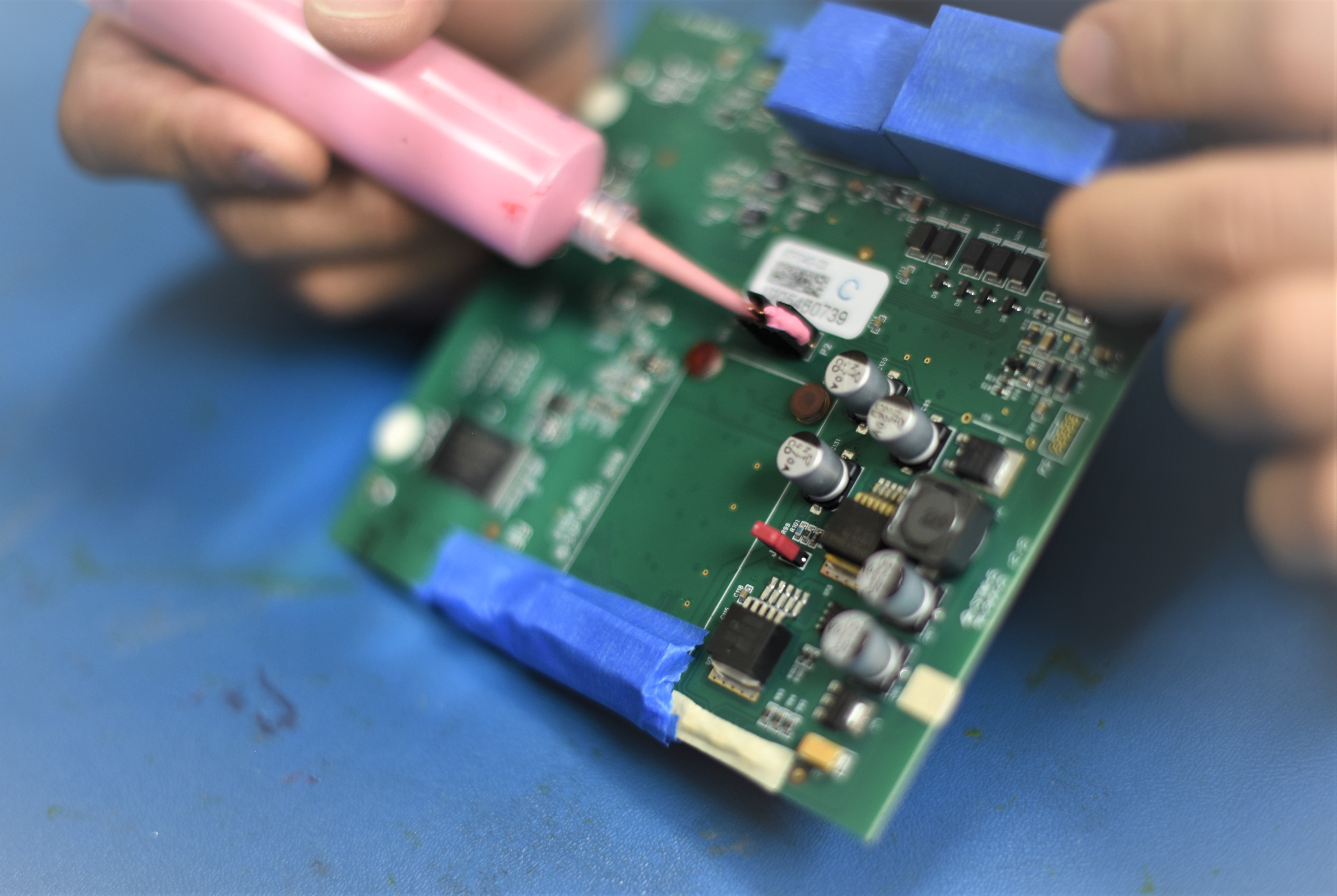
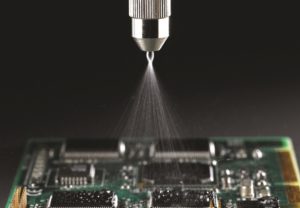
Conformal Coating SprayConformal coating is typically applied after high-quality PCB fabrication and SMT assembly processes are completed. Integrating coating into the full assembly workflow helps manufacturers improve overall product durability while maintaining strict quality standards. Proper masking techniques ensure that connectors, switches, test points, and other critical areas remain accessible and functional. During the application process, coatings are carefully applied using methods such as spraying, brushing, or automated selective coating systems. After application, curing processes allow the coating to harden and form a strong protective layer without affecting the performance of the electronic components.
There are several types of conformal coatings available, each designed to meet different environmental and operational requirements. Acrylic coatings are commonly used because they are cost-effective and provide good moisture resistance while remaining easy to repair or remove if necessary. Silicone coatings perform well in high-temperature environments and offer excellent flexibility, making them ideal for electronics exposed to thermal expansion or vibration. Urethane coatings provide strong resistance to chemicals and solvents, which makes them suitable for industrial and automotive applications. Parylene coatings, often used in medical and aerospace electronics, provide an ultra-thin yet extremely durable protective layer applied through a specialized vapor deposition process.

Beyond protection from environmental hazards, conformal coating also improves product reliability and reduces long-term maintenance costs. By preventing corrosion and contamination, manufacturers can significantly lower the risk of electrical failures, product recalls, or warranty claims. This additional protection is especially valuable for electronics used in mission-critical applications where equipment downtime or failure can have serious consequences.

Another important benefit of conformal coating is that it allows electronics to be used in more demanding environments without redesigning the entire circuit board. Products intended for outdoor installations, marine use, transportation systems, or industrial facilities often rely on conformal coating to maintain consistent performance under harsh conditions.

At Board Assembly, the conformal coating process is carefully controlled and inspected to ensure complete coverage and proper curing. Quality checks verify coating thickness, adhesion, and overall protection so that every assembly meets strict performance standards.

If your products must operate in challenging environments, a professional conformal coating service can significantly improve reliability and longevity. Contact Board Assembly today to learn how our PCB fabrication, assembly, and conformal coating solutions can help protect your electronics and ensure dependable performance for years to come.

Conformal Coating Spray

The Growing Importance of Conformal Coating in PCB Protection

Printed Circuit Boards (PCBs) are at the heart of modern electronics—but as devices become smaller, more powerful, and more widely used in harsh environments, protecting these sensitive components has become more critical than ever. That’s where conformal coating in PCB protection steps in as a game-changer.

Whether it’s a consumer product exposed to daily wear or a military-grade device deployed in extreme climates, PCBs need an added layer of protection. Conformal coating provides exactly that: a thin, durable film that safeguards electronics from moisture, dust, chemicals, and temperature extremes without compromising performance or size.

Solder Mask on Printed Circuit BoardsWhat Is Conformal Coating?

conformal coating maskingconformal coating maskingConformal coating is a protective chemical layer applied to the surface of a PCB to create a barrier against environmental contaminants. It’s “conformal” because it conforms to the shape of the board and its components, coating even hard-to-reach areas without needing bulky enclosures.

At Board Assembly, we apply conformal coatings using precise, industry-approved techniques that ensure full coverage without interfering with the function or accessibility of electronic parts.

Why Is Conformal Coating Becoming More Important?

As electronics continue to expand into sectors like automotive, aerospace, defense, and IoT devices, the environments these PCBs operate in are becoming more unpredictable and challenging.

Here are a few key reasons conformal coating is gaining traction:

  • Moisture & Corrosion Resistance: In humid or marine environments, moisture can cause corrosion, short-circuits, and long-term failure. Conformal coatings seal off the PCB surface, keeping moisture at bay.

  • Chemical Protection: In industrial settings, exposure to cleaning agents, fuels, or harsh chemicals is common. A conformal coating acts as a shield, preventing chemical damage.

  • Dust & Debris Protection: For electronics in outdoor or manufacturing environments, dust accumulation can hinder performance. Coatings protect against particulate buildup.

  • Extended Product Life: By protecting the PCB from environmental damage, conformal coatings significantly increase product reliability and longevity—essential for industries where equipment failure is not an option.

Applications Across Industries

From automotive control units to aerospace avionics, and from wearable medical devices to outdoor smart home systems, conformal coating in PCB protection is now a standard best practice in many industries. As miniaturization and high-performance demands increase, protective coatings are no longer optional—they’re essential.

Why Work With Board Assembly?

At Board Assembly, we offer advanced PCB assembly solutions that include precision-applied conformal coatings to ensure your product performs reliably in any environment. Whether you need protection from moisture, vibration, chemicals, or dust, our team ensures your PCB is ready for real-world conditions.


Want to learn more about how conformal coating can improve your product’s performance and durability? Contact us today to discuss your PCB protection needs.