Tag Archives: Printed Circuit Board (PCB) fabrication

Bare Board

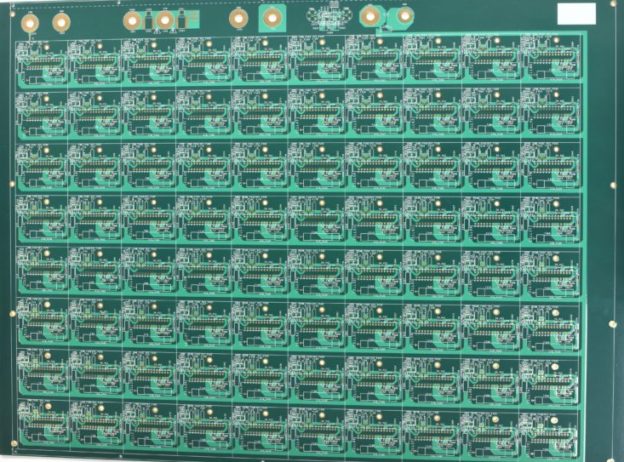
Electronics Printed Circuit Board (PCB) Fabrication Services for Every Project

In today’s rapidly evolving technology landscape, electronic products are becoming smarter, faster, and more advanced than ever before. From consumer electronics and industrial automation equipment to medical devices, automotive systems, and telecommunications products, virtually every electronic innovation begins with one essential component—a high-quality Printed Circuit Board (PCB).

Choosing the right PCB fabrication partner is one of the most important decisions a company can make during product development. The quality of the fabricated circuit board directly impacts product reliability, manufacturing efficiency, and long-term performance. At ACME PCB Assembly, we help customers simplify this process by matching every project with the PCB fabrication solution that best fits its technical requirements, budget, and production schedule.

Why PCB Fabrication Matters

PCB fabrication is the process of manufacturing the bare circuit board that serves as the foundation for electronic components. Before a board can be assembled with resistors, capacitors, integrated circuits, and connectors, it must first be fabricated to precise engineering specifications.

Modern PCB fabrication involves multiple highly controlled manufacturing processes, including:

  • Layer construction
  • Copper etching
  • Drilling
  • Plated through-hole processing
  • Surface finishing
  • Solder mask application
  • Silkscreen printing
  • Electrical testing
  • Final inspection

Every step must meet strict quality standards to ensure the finished PCB performs reliably in its intended application.

Finding the Right PCB Fabrication Partner

Bare BoardNot every PCB fabrication facility specializes in the same types of circuit boards. Some manufacturers focus on quick-turn prototypes, while others specialize in high-volume production, multilayer boards, flexible circuits, or high-density interconnect (HDI) technology.
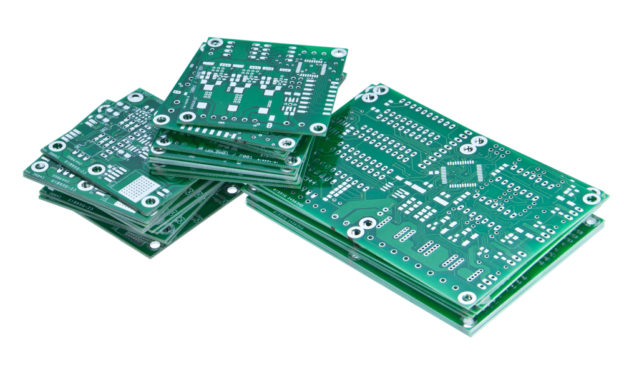
Selecting the wrong fabrication partner can result in unnecessary delays, increased costs, or manufacturing challenges.

At ACME PCB Assembly, we remove the guesswork by helping customers select the most appropriate fabrication facility for every project. We currently work with more than ten trusted domestic and offshore PCB fabrication partners, allowing us to match each new project with the supplier best equipped to meet its unique requirements.

This flexible approach allows us to support a wide variety of industries and applications while maintaining exceptional quality and competitive pricing.

Complete PCB Fabrication and Assembly Solutions

One of the biggest advantages of working with ACME PCB Assembly is our ability to provide complete electronics manufacturing solutions. Instead of coordinating multiple vendors, customers can rely on a single experienced partner from fabrication through final assembly.

Our services include:

  • PCB fabrication
  • PCB assembly
  • Component sourcing
  • Surface Mount Technology (SMT) assembly
  • Through-hole assembly
  • Mixed-technology assembly
  • Prototype PCB services
  • Functional testing
  • Quality inspection
  • Final product assembly

Managing every phase of production under one coordinated process helps reduce lead times, improve communication, and simplify project management.

Supporting Everything from Prototypes to Production

Whether you’re developing a brand-new product or preparing for full-scale manufacturing, ACME PCB Assembly has the experience and resources to support your production goals.

We manufacture:

  • Prototype printed circuit boards
  • Quick-turn PCB fabrication
  • Low-volume production
  • Medium-volume manufacturing
  • Multilayer PCBs
  • Rigid printed circuit boards
  • Custom electronic assemblies

Our rigid PCB assembly capabilities support circuit boards ranging from 2-layer to 26-layer designs, allowing us to manufacture products for increasingly sophisticated electronic applications.

Our advanced production equipment can also accurately place miniature components as small as 01005 packages while supporting fine-pitch Ball Grid Array (BGA) assemblies measuring 5 mm x 5 mm.

Additional Value-Added Manufacturing Services

In addition to PCB fabrication and assembly, ACME PCB Assembly provides several specialized manufacturing services that help customers complete projects more efficiently.

These include:

  • PCB conformal coating services
  • Prototype assembly
  • Low-pressure injection molding
  • Product finishing
  • Custom manufacturing support

Providing these additional capabilities allows customers to consolidate multiple manufacturing operations into one trusted supplier, saving both time and production costs.

Quality You Can Depend On

Quality remains one of the most important considerations in PCB fabrication. Every circuit board must meet exact electrical and mechanical specifications before it moves into assembly.

ACME PCB Assembly is an ISO 9001-certified Electronics Manufacturing Services (EMS) provider, demonstrating our commitment to maintaining consistent manufacturing processes and delivering dependable products. We work exclusively with carefully evaluated domestic and offshore manufacturing partners who meet our strict quality requirements.

Each production run undergoes thorough inspections throughout the manufacturing process to help ensure every PCB meets customer specifications before delivery.

Experience That Builds Long-Term Partnerships

With more than 25 years of experience in PCB fabrication and electronics manufacturing, ACME PCB Assembly has built lasting relationships with customers across numerous industries. More than 25% of our customers have partnered with us for over ten years, reflecting our commitment to exceptional service, dependable quality, and responsive support.

We also offer special pricing for new customers on select 2-layer and 4-layer PCB fabrication projects, making it easier for companies to experience the quality and service that have earned the trust of our long-term clients.

Whether your project requires prototype boards, complex multilayer PCBs, or complete turnkey manufacturing, our experienced team is ready to help.

ACME PCB Assembly is an ISO 9001:2008 certified EMS provider, we make sure that you get the best price without compromising the quality. We take full responsibility for your printed circuit board order since we only use ACME PCB Assembly certified suppliers as our domestic and offshore partner.

Contact us today to find out about our other services and how we can help your business.

Frequently Asked Question

What PCB fabrication services does ACME PCB Assembly provide?

ACME PCB Assembly provides PCB fabrication, prototype circuit boards, multilayer PCB manufacturing, PCB assembly, SMT assembly, through-hole assembly, conformal coating, low-pressure injection molding, component sourcing, and complete turnkey electronics manufacturing. Learn more by visiting our PCB Assembly Services page or contact our team to discuss your next project.


Recycling Unused PCB

Sustainability in PCB Manufacturing: Building a Greener Future for Electronics

Printed circuit boards (PCBs) are the backbone of nearly every modern electronic device—from smartphones and automotive systems to medical equipment and industrial controls. As global electronics demand continues to rise in 2025 and beyond, the environmental impact of PCB manufacturing has become a central concern for manufacturers, engineers, and consumers alike. Today, sustainability is no longer a trend—it is a responsibility. Forward-thinking companies like Board Assembly are embracing eco-conscious manufacturing practices to reduce environmental impact while maintaining the highest quality standards.

Why Sustainability Matters More Than Ever

rework your pcbPCB production is traditionally resource-intensive. It requires large amounts of raw materials, water, energy, and chemical processing. Without proactive sustainability efforts, these processes can contribute to carbon emissions, hazardous waste, and long-term environmental damage. At the same time, many OEMs and end users now demand greener supply chains. Regulatory pressure is increasing, and corporate responsibility expectations are higher than ever. Sustainable PCB manufacturing is now essential to long-term business success and global environmental stewardship.
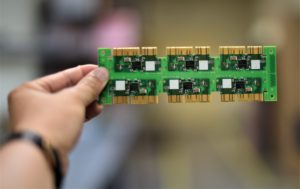
Key Sustainable Practices in Modern PCB Manufacturing

Material Optimization

One of the most important steps toward sustainability starts with material selection. Today’s manufacturers increasingly rely on lead-free solders, halogen-free laminates, and RoHS-compliant components to reduce toxic exposure and improve recyclability. In addition, unused material from fabrication runs is now more frequently recovered and reused to minimize waste.

Energy Efficiency

Energy consumption remains one of the largest contributors to a PCB manufacturer’s carbon footprint. In 2025, many facilities are modernizing with high-efficiency SMT equipment, LED lighting, and optimized production workflows. Some manufacturers are also incorporating renewable energy sources such as solar power, significantly lowering overall emissions.

Advanced Chemical Management

Etching, plating, and surface finishing require chemicals that must be handled responsibly. Sustainable facilities invest in closed-loop chemical recycling systems, solvent recovery programs, and state-of-the-art wastewater treatment to prevent harmful discharge into the environment. These systems protect both the environment and worker safety.

Design for Sustainability

Engineers now play a direct role in environmental impact reduction through design for sustainability (DfS). Smaller PCB layouts, HDI designs, and optimized trace routing reduce material usage while increasing electrical performance. Multi-functional boards reduce the need for multiple assemblies, helping lower both manufacturing waste and energy consumption.

Recycling and End-of-Life Recovery

Electronic waste is one of the fastest-growing waste streams in the world. Sustainable PCB manufacturers now support recycling programs that recover valuable metals such as gold, copper, and silver from old circuit boards. This circular economy approach reduces demand for new mining while keeping harmful materials out of landfills.

The Business Advantages of Sustainable Manufacturing

Sustainability is not only good for the environment—it also makes strong business sense. Companies that adopt green manufacturing practices benefit from:

  • Lower long-term operational costs

  • Reduced regulatory risk

  • Stronger brand reputation

  • Increased appeal to environmentally conscious customers

  • Improved supply chain stability

In today’s competitive electronics market, sustainability is now a differentiator that directly influences purchasing decisions.

Partner with an Eco-Conscious PCB Manufacturer

PCB Assembly service in Los AngelesBy selecting a manufacturer committed to sustainable production, businesses take an active role in protecting the environment without sacrificing performance or reliability. Board Assembly continues to emphasize environmentally responsible practices across its PCB fabrication and assembly services, delivering high-quality circuit boards that meet both engineering and environmental standards.
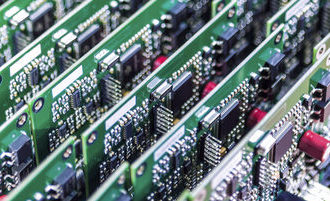
To learn more about sustainable PCB manufacturing, visit Board Assembly’s PCB Fabrication page and discover how innovation and environmental responsibility are shaping the future of electronics.

Printed Circuit Boards

What is a PCB Silkscreen on Printed Circuit Boards?

If you grew up taking apart radios, computers, or video game consoles just to see how they worked, you’ve likely studied a printed circuit board (PCB) up close. Among the intricate metallic traces and soldered components, you might have noticed small white letters, numbers, and symbols printed across the board’s surface. These markings aren’t random—they’re part of a critical layer called the PCB silkscreen.

Understanding the PCB Silkscreen Layer

The PCB silkscreen is a printed layer that provides human-readable information on a circuit board. Typically created with special inks, the silkscreen identifies important features such as:

  • Component reference designators (like R1, C5, U2)

  • Test points

  • Warning symbols

  • Company logos

  • Part numbers and date codes

  • Polarity indicators for diodes, LEDs, and capacitors

Most PCB silkscreens are printed in white ink because it contrasts clearly with the traditional green solder mask. However, silkscreen inks can also be black, red, blue, or yellow, depending on the board’s color scheme or specific customer requests.

Why Is the Silkscreen Important?

The silkscreen acts as a visual guide for anyone who assembles, repairs, or tests the PCB. It tells workers how components should be placed and identifies key features to assist in troubleshooting and maintenance. Without a clear silkscreen, identifying the purpose or placement of components could quickly become confusing, leading to costly mistakes or longer assembly times.

Additionally, the silkscreen enhances safety by marking high-voltage areas or other hazards clearly.

How Silkscreens Are Applied

Printed Circuit Board FabricationAdding the silkscreen is typically the final step in PCB fabrication, done while the boards are still panelized. The ink used must be carefully chosen to withstand the chemicals and heat involved in soldering and assembly. Once printed, the board moves to the final finishing or routing phase.
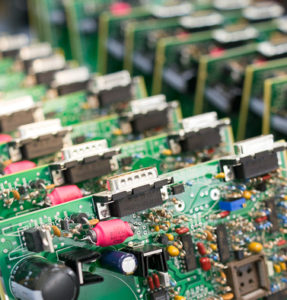
There are several methods for applying a silkscreen:

  • Manual Screen Printing: Traditional, cost-effective for low-volume runs

  • Liquid Photo Imaging (LPI): Offers higher precision for dense, complex boards

  • Direct Legend Printing (DLP): Uses inkjet printers for extremely accurate and fast printing

Each method is selected based on the PCB’s design complexity, production volume, and budget.

Common Mistakes to Avoid in Silkscreen Design

Even experienced PCB designers can make mistakes when preparing the silkscreen layer. Some key things to watch out for:

  • Avoid printing over pads: Silkscreen ink can interfere with soldering and create defects.

  • Keep text legible: Fonts should be large enough to read easily, even after solder mask application.

  • Allow for registration tolerance: Slight shifts during manufacturing mean text and symbols should have enough spacing to stay clear and readable.

A well-designed silkscreen makes the PCB easier to work with and improves overall product quality.

Turnkey Yun IndustrialTrust ACME PCB for Quality PCB Manufacturing
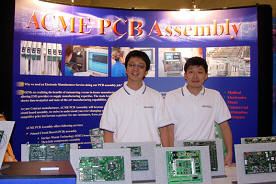
At ACME PCB, we take pride in handling every detail of your PCB project—including the silkscreen layer. Our team ensures that every marking is clear, correct, and perfectly aligned, giving you boards that are not only functional but also easier to assemble, maintain, and troubleshoot.


Need a reliable PCB manufacturer that gets the details right? Contact ACME PCB today to get started!

ACME PCB Assembly

Providing Electronics Manufacturing Services (EMS) Since 1993

Providing Electronics Manufacturing Services (EMS) Since 1993

The electronic manufacturing services (EMS) industry took off after the late 1970’s. Before this, most electronics manufacturing that was done in large quantity production runs was handled by in-house assembly only.

Now, the electronic manufacturing services (EMS) provider offers more flexibility and easier resources to deal with issues for smaller companies who doing limited runs.  An electronic manufacturing services (EMS) provider is able to specialize in large manufacturing, raw materials procurement, and resources.

ACME PCB AssemblySince the early 1990’s, the development of Surface Mount Technology (SMT) on PCB has allowed for the rapid assembly of electronics, many electronic components switched to Surface Mount Technology (SMT) from Through hole components.  SMT components are making more and more small footage, more and more fine pitch, the equipment for SMT components are requiring more and more accuracy. For small businesses, it is a good idea to outsource your EMS needs.

Outsourcing all your manufacturing needs to a Electronic manufacturing services (EMS) provider helps you to save money, it also helps you to control your overhead cost, which in turn reduces your companies overhead cost.  As a result, Electronic manufacturing services (EMS) provider gives you the opportunity to produce your products at a lower cost.

ACME PCB Assembly in Carson, California has been an Electronic manufacturing services (EMS) provider since 1993. OEMs are realizing the benefits of outsourcing versus in-house manufacturing. Outsourcing to Electronic manufacturing services (EMS) provider enables OEMs to concentrate on their core competencies by allowing Electronic manufacturing services (EMS) providers to supply manufacturing expertise. The main benefits of outsourcing include a reduction in costs and investment, additional capacity, shorter time-to-market and state-of-the-art manufacturing capabilities.

As your Contract manufacturer, ACME circuit board assembly will become a business partner who has a vested interest in your success. By outsourcing to ACME circuit board assembly, ACME PCB Assembly strive to understand your ever-changing needs in your specific competitive markets. Our objective is to provide not only quality products with a competitive price but become a partner for our customer, from product design to the distribution process.

Contact Us Today