Author Archives: Erin

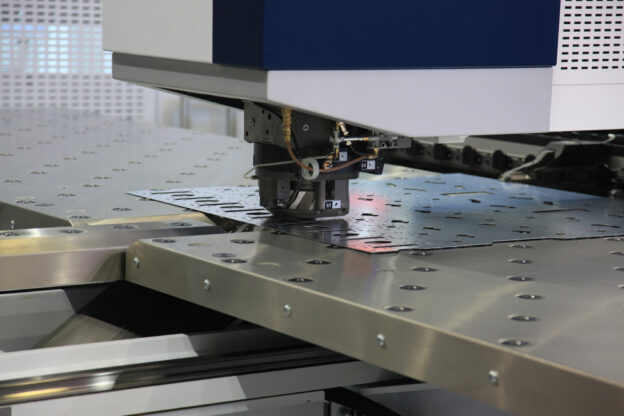
CNC punching machine

How does Metal Punching Differ from Stamping

Often times, people who are not strictly linked with metal works fields, can confuse between the sheet metal punching and the sheet metal stamping.

This happens because, at first glance, the meaning of these two words might seem the same. On the contrary, the sheet metal punching and the stamping are really different starting from the equipment required to achieve punching and stamping.
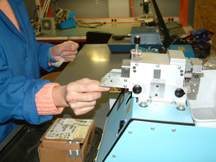
The first ones, are metal forming processes realized with automatic CNC machines that use punch presses and dies realizing any kind of hole. The punch pass through the sheet metal while the dies, located on the other side of the metal piece, work as support and help punches to put more force ensuring the non-breaking of metal.

Otherwise, the stamping is the set of operations performed to obtain specific shapes and it includes our sheet metal punching. Stamping is in fact a consequence of others metal processes such as punching, blanking, sheet metal deep-drawing and bending. It’s the ending process useful for giving to metal pieces a specific shape to the entire piece.

To be clear, there’s a third metal process which often is confused and it’s called pressing. The metal pressing, contrary to the sheet metal punching is processed to give shape without breaking the metal piece. For example, pressing process is used to realize corners.

Contact Us today to inquire about our services.

Proud to Be a Lead-Free PCB Assembly Provider

Is lead-free (Pb-Free) also on your mind? It should be. Lead-free (Pb-Free) will impact almost everyone in the electronics industry – from suppliers of component, board and materials like paste and flux to manufacturers and users of electronics products and equipment. Also expect considerable investment both in human resources and capital equipment. Your relationship with your suppliers and customers will also be tested.

There’s a reason that in the United States we no longer allow lead in paint or in gasoline. Though lead is a naturally occurring element, it can be highly toxic to humans. It has been connected with behavior and learning problems, lower IQ, slowed growth, anemia, and even coma and death in severe cases. Children and pregnant women are the most at risk of lead poisoning.

Printed Circuit Board FabricationFor a long time, lead has been part of the soldering process, which is critical to making printed circuit boards. Here at ACME PCB Assembly, we have made the commitment to adopt lead-free solders. Replacing lead solders requires more than just replacing equipment. Lead-free solders have a higher melting point, which means we have had to revise our entire production and assembly process. This required re-training our workers.
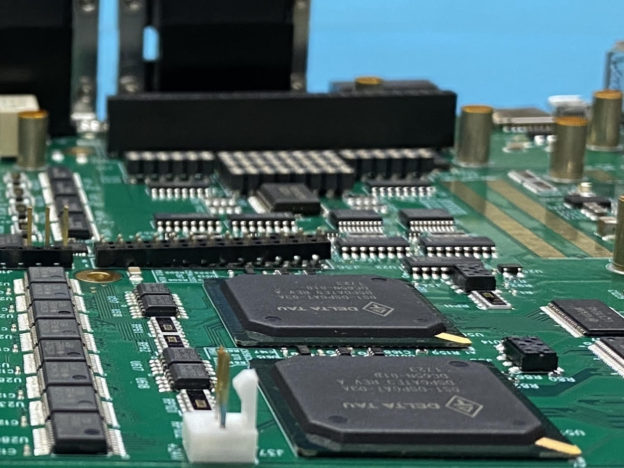
Lead-free solder and assembly reliability is achieved if trained specialists carefully implement several process requirements. There are a number of variables that must be taken into consideration to achieve lead-free solder assembly joint reliability.

ACME PCB Assembly is flexible in meeting your requirements. We have offered Lead-Free (Pb-Free) soldering since 2005. Please review Design to Avoid Tin Wiskers for RoHS compliant (Lead-Free) assembly. Though the change was difficult, it was worth it to remove the risk of lead exposure from our facilities.  Now, when you work with us, you know that you are working with a lead-free PCB assembly provider.


Printed Circuit Board Fabrication

What You Actually Need to Make a Printed Circuit Board?

What Do You Actually Need to Make a Printed Circuit Board?

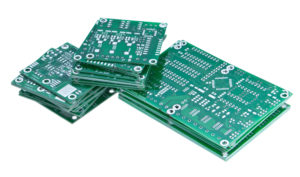
Printed circuit boards are in all manner of electronics. If it has computing power, then it is likely to include a printed circuit board. What is a PCB actually made of, and what components does it include? Surprisingly, PCBs are not too complicated.

The first ingredient you’ll need is the printed circuit board itself. The board won’t be of much use until you assemble it. To do that, you’ll need electronic components, soldering materials, soldering flux, and the soldering equipment.  Using the soldering equipment, printed circuit board assemblers, like Acme PCB Assembly, solder on the electronic components. The soldering equipment includes things like solder wire, solder paste, solder bar, and solder performs.

The Components Involved in Printed Circuit Boards

If the copper traces behave like the skeleton of the PCB, acting like the basic structure – then the components are the vital organs. Each component used has a different function. Using all these different components gives the circuit the unique qualities that it needs to fit for its intended purpose. Depending on what the device is or what the electronic item is, a PCB is designed for a variety of different components that will be needed for different circuits. These components can consist of a wide range of electronic parts. Some common PCB components include:

Battery: Provides the voltage to the circuit.

Resistors: Control the electric current as it passes through them. They’re color coded to determine their value.

LED’s: Light emitting diode. Lights up when current flows through it, and will only allow current to flow in one direction.

Transistor: Amplifies charge.

Capacitors: These are components which can harbor electrical charge.

Inductor: Stores charge and stops and change in current.

Diode: Allows current to pass in one direction only, blocking the other.

Switches: Can either allow current or block depending if they are closed or open.

Of course, there’s a lot more to printed circuit board assembly, but we’re not about to give away all of our secrets! If you want to work with a trusted and experienced printed circuit board assembler, contact us today!


pcb-fabrication-and-assembly-in-usa

Understanding Quick Turn PCB Fabrication

Quick turn is imperative when it comes to PCB fabrication. Quick go-to-market can be a large source of having a competitive advantage. At ACME PCB Assembly we tend to place a great deal of importance when it comes to providing a prompt delivery service of your order, while complying with all quality control and certification measures. ACME PCB Assembly provides many different types of quick turn flex PCB fab, quick turn multi-layer PCB fab, quick turn rigid PCB fab, quick turn rigid-flex PCB fab and much more.

We incorporate strict testing protocols and our outstanding inspection systems insure that the quality is authenticated, while we still meet your timeline. Regardless if your requirement is simple or multi-layered boards, we ensure that the Quick Turn PCB Manufacturing process is seamless.

Understanding the Benefits of Quick Turn PCB Fabrication

One of the biggest benefits is the quick turnaround time, meaning that you can get your product to market without any manufacturing delay.  This in turn gives you a leading advantage from the other competition, especially since you are likely to be operating in a highly competitive market.  ACME PCB Assembly ensures that your go to market plans are not ruined or delayed by the non-availability of PCB boards.  We offer high quality boards in a timely manner, which helps getting through the initial product launch and marketing plan seamlessly.

Applications Available for Quick Turn PCB Fabrication

Turnkey PCBPCB Prototypes

Quick turn PCBs hold their importance in prototyping because when you need a quick and accurate idea of how your final product will look and perform, they are done quickly and available right away. Quick turnaround times come in handy, in determining the efficacy of the product before investing in a large production run. It’s also an advantage in the fact that any improvements or changes can be made in a timely matter holds it’s perks also.

Standard Production Run

When you are ready and start looking for larger production runs, the one thing that is of most importance is the delivery time.  Quick turn PCBs ensure that there are no delays, making it possible for device manufacturers to reach their end consumer quickly.  Another factor to look at is that shorter manufacturing times with standard SOPs can also result in optimization of costs, which is a significant source of competitive advantage.

Flexible Circuit board

An Overview of Constantan in Flexible Circuit Boards

The electrical and thermal conductivity that copper creates makes it an obvious choice as a conductor in printed circuit board (PCB) construction, but in many applications that require flexible circuit boards, copper alloy metals can be far better to use. Some of those applications include using conditions of extreme heat or cold, where copper’s low resistance becomes a liability. Constantan is an alloy consisting of 55% copper and 45% nickel, this is one of several metals that has been proven effective for its higher resistance and lower thermal conductivity. Constantan used in flexible PCBs is an ideal choice for many applications.

Flexible circuit

Constantan is the oldest and most commonly used of what are known as “strain gauge alloys,” which are metals used to measure how materials react to stress from various forces. These alloys have become very important to the construction of many flexible circuits. Flex circuit boards are often designed for technologies that operate in harsh environments and require a high density of circuitry in enclosures with limited space. The market demand for flex PCBs that can withstand high temperatures has increased as such components are routinely used in oil drilling, semiconductor processing, medical diagnostic technology, and the construction of airplanes and defense systems.

Flexible circuits are small and light when compared with rigid PCBs and cable bundles. Flex circuits fit into many tight spaces, they can also bend around corners, and can better withstand vibration, high pressure, and extreme temperatures. They take up 75% less space than rigid PCBs and can be designed to accept virtually any necessary connectors. This makes flexible circuit boards ideal for many defense, medical, and aerospace technologies, like cryogenics, infrared imaging, and the construction of satellites, which often must withstand temperatures down to -150°F and up to 550°F.

Flex circuits can be printed single- or double-sided, multi-layer, or in combinations of rigid and flexible boards. All require unique processing in their fabrication. The choice for many designs includes thin, durable, material like Constantan in flexible PCBs. Constantan’s resistance remains stable across an extreme range of temperatures as well as in high pressure and other stressful situations. These qualities, plus its relatively low cost, have made Constantan foil a desirable conductive material for flex PCBs designed for hostile operating environments and rugged electronics.

In addition to solving the problem of thermal conductivity due to extreme external temperatures, Constantan in flexible PCBs can help maintain long-term reliability in situations when internal temperatures remain high. As electronics become faster and smaller, they require innovative designs and materials to deal with heat buildup. Along with the effective design of heat sinks and air flows, the use of Constantan as a conductor can lower thermal conductivity in flexible PCBs.