 Back Home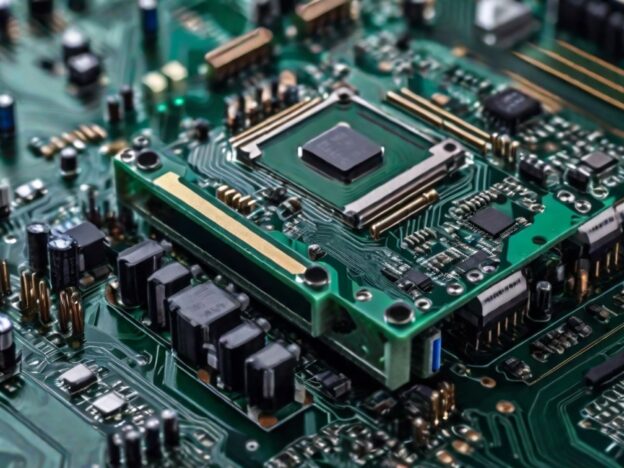
Printed circuit boards (PCBs) are at the heart of modern electronics. From industrial equipment and medical devices to telecommunications systems, automobiles, computers, and consumer electronics, printed circuit boards provide the foundation that allows electronic components to connect and work together.
But what does it actually take to turn a bare printed circuit board into a functioning electronic assembly?
The answer involves more than just the PCB itself. Manufacturers need the correct electronic components, soldering materials, assembly equipment, detailed design information, and quality-control processes to produce a reliable printed circuit board assembly (PCBA).
Start With the Printed Circuit Board
 The PCB provides the physical structure and electrical connections for an electronic device. Copper traces create conductive pathways between components, while pads provide locations where components can be electrically and mechanically connected to the board.
A bare PCB, however, cannot perform its intended electronic functions until the necessary components are installed.
This is where PCB assembly begins.
At ACME PCB Assembly, electronic components are placed and soldered onto printed circuit boards according to the customer’s design and specifications. Depending on the project, assembly may involve Surface Mount Technology (SMT), through-hole assembly, or a combination of both.
What Materials Are Used for PCB Assembly?
The exact materials and manufacturing processes depend on the PCB design. Modern electronics manufacturing may use solder paste, solder wire, solder bars, flux, and specialized solder preforms.
Solder paste is particularly important in SMT assembly, where it is deposited onto PCB pads before components are placed and the assembly passes through a reflow process.
Solder preforms are also used for certain applications when a precise or additional volume of solder is required. Modern preforms can even be supplied for automated pick-and-place processes.
Common Components Used on Printed Circuit Boards
Think of the PCB and its copper pathways as the structure that connects everything together. The electronic components are what allow the circuit to perform its intended functions.
Different PCB designs require different combinations of components. Some of the most common include:
Resistors: Resistors limit or regulate the flow of electrical current and can also be used to establish voltage levels within a circuit.
Capacitors: Capacitors store and release electrical energy. They are commonly used for filtering, energy storage, timing, and stabilizing voltage.
Inductors: Inductors store energy in a magnetic field and can be used for filtering, power conversion, and managing changes in current.
Diodes: Diodes generally allow electrical current to flow in one direction while restricting it in the opposite direction.
LEDs: Light-emitting diodes, or LEDs, produce light when current flows through them and are commonly used for indicators, displays, and lighting applications.
Transistors: Transistors are semiconductor devices commonly used to switch or amplify electronic signals.
Switches: Switches open or close an electrical circuit, controlling whether current can flow through a particular path.
Integrated Circuits: Modern PCBs frequently contain integrated circuits, or ICs, that can perform complex functions such as processing, memory, communication, signal control, and power management.
Connectors: Connectors allow the PCB to communicate with other circuit boards, power supplies, cables, sensors, displays, or other parts of an electronic system.
Modern PCB assemblies may also contain sensors, relays, fuses, oscillators, transformers, microcontrollers, and many other specialized components depending on the application.
Putting All the Components Together
Having the right components is only part of the PCB assembly process. Components must be placed in the correct positions and orientations and properly soldered to create reliable electrical connections.
Modern PCB assembly can involve automated equipment capable of accurately placing very small surface-mount components. Through-hole components may require different assembly and soldering processes.
After assembly, inspection and testing help identify problems such as incorrect component placement, soldering defects, missing components, or other manufacturing issues.
Professional PCB Assembly Makes the Difference
While the basic ingredients of a printed circuit board assembly may sound straightforward, manufacturing reliable electronics requires experience, specialized equipment, quality materials, and careful process control.
That’s where an experienced PCB assembly company can make a difference.
ACME PCB Assembly provides professional printed circuit board assembly services for customers requiring everything from prototypes to production quantities. Rather than trying to coordinate component sourcing, PCB assembly, soldering, inspection, and testing separately, customers can work with an experienced manufacturing partner to simplify production.
If you have a new PCB project or need a dependable manufacturing partner for an existing electronic product, contact ACME PCB Assembly today to discuss your requirements.
Frequently Asked Questions
What is the difference between a PCB and a PCBA?
A PCB is the bare printed circuit board containing the conductive pathways used to connect electronic components. A PCBA, or printed circuit board assembly, is a PCB after components such as resistors, capacitors, integrated circuits, connectors, and other electronic parts have been mounted and soldered onto it.


