 Back Home
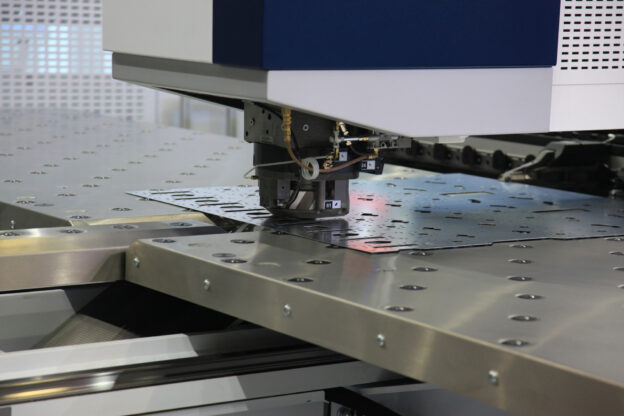
When it comes to metal fabrication, the terms sheet metal punching and sheet metal stamping are often used interchangeably. Although these manufacturing processes share some similarities, they serve different purposes and involve different techniques.
Understanding the differences between sheet metal punching, stamping, and pressing can help businesses select the most appropriate manufacturing process for their products.
At ACME PCB Assembly, we understand the importance of precision manufacturing and selecting the right fabrication methods for electronic components and metal parts.
 What Is Sheet Metal Punching?
Sheet metal punching is a manufacturing process used to create holes, slots, and other openings in sheet metal. This process typically uses a punch and die to remove material from a metal workpiece.
During the punching process, a punch presses into the sheet metal while a die positioned underneath supports the material and provides an opening for the removed metal.
Modern sheet metal punching operations frequently use computer numerical control (CNC) machines to achieve precise and repeatable results.
Sheet metal punching and metal finishing services can be used to produce components requiring accurate openings and detailed patterns.
Benefits of Sheet Metal Punching
- High precision: Creates accurate holes, slots, and openings.
- Repeatability: CNC equipment supports consistent production results.
- Production efficiency: Suitable for repetitive fabrication operations.
- Design flexibility: Accommodates different hole sizes, shapes, and patterns.
- Reduced manual processing: Automated machinery can minimize labor requirements.
Sheet metal punching is commonly used in electronics enclosures, mounting brackets, control panels, and industrial equipment components.
What Is Sheet Metal Stamping?
Sheet metal stamping is a broader manufacturing process that uses presses and specialized tooling to cut, bend, or form sheet metal into specific shapes.
Unlike punching, which primarily creates openings by removing material, stamping encompasses several different metalworking operations.
Common sheet metal stamping techniques include:
- Punching: Removing material to create holes or openings.
- Blanking: Cutting a desired shape from a larger metal sheet.
- Bending: Forming angles or curves in metal components.
- Deep drawing: Transforming flat metal sheets into hollow or recessed shapes.
- Embossing: Creating raised or recessed designs on metal surfaces.
Stamping is frequently used for manufacturing metal housings, automotive components, electronic equipment parts, and other precision metal products.
What Is the Difference Between Sheet Metal Punching and Pressing?
Another commonly misunderstood term is sheet metal pressing.
Pressing generally refers to using mechanical or hydraulic force to shape, form, or cut metal. Punching and stamping can both be performed using presses.
However, when pressing is used specifically for forming operations, the metal is reshaped rather than intentionally cut or separated.
For example, a press may bend a sheet metal component to create corners, curves, or other structural features.
The primary difference is that punching removes material, while forming operations reshape the existing metal.
Choosing the Right Sheet Metal Fabrication Process
Selecting the appropriate metalworking method depends on your product design, material thickness, production volume, and required tolerances.
Sheet metal punching is typically ideal for components requiring precise holes and openings. Stamping may be more appropriate when a product requires multiple cutting and forming operations.
Businesses should also consider tooling costs, production quantities, material properties, and finishing requirements before selecting a fabrication method.
Frequently Asked Questions About Sheet Metal Punching and Stamping
Is sheet metal punching the same as stamping?
No. Punching is a specific operation used to create holes or openings in sheet metal. Stamping is a broader manufacturing category that can include punching, blanking, bending, and forming.
What types of metal can be punched?
Common materials include aluminum, stainless steel, carbon steel, copper, and brass. The appropriate equipment and tooling depend on the material and its thickness.
What are the advantages of CNC sheet metal punching?
CNC punching provides accurate positioning, repeatable results, efficient production, and flexibility when manufacturing components with multiple holes or complex patterns.
Is sheet metal stamping suitable for high-volume production?
Yes. Sheet metal stamping is frequently used for high-volume manufacturing because dedicated tooling can produce consistent components efficiently.
Contact ACME PCB Assembly for Manufacturing Solutions
At ACME PCB Assembly, we understand that precision and quality are essential in electronics manufacturing and related metal fabrication applications.
Whether your project involves electronic components, metal enclosures, or specialized manufacturing requirements, selecting the right production process is important.
Contact ACME PCB Assembly today to discuss your project and learn more about available manufacturing solutions.
Phone: 310-715-1898


