Tag Archives: Contract Manufacturing

Printed Circuit Boards

The Benefits of Working with a Full-Service PCB Assembly Partner

Choosing the right manufacturing partner can make the difference between a successful product launch and costly production delays. Many companies work with separate vendors for PCB fabrication, prototype development, component sourcing, and final assembly, but consolidating these services with a full-service PCB assembly provider can significantly improve efficiency, quality, and overall project management.

A full-service PCB assembly partner offers expertise throughout the entire manufacturing process. Instead of coordinating multiple suppliers, businesses can rely on one experienced team to oversee everything from design review and prototype builds to fabrication, assembly, testing, and production. This streamlined approach reduces communication errors and helps keep projects on schedule.
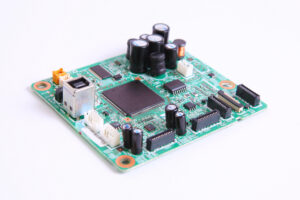
High quality pcbOne of the biggest advantages is improved consistency. When fabrication and assembly are handled by the same provider, there is greater control over quality standards and manufacturing processes. Engineers and production teams can work together to identify potential issues early, minimizing defects and reducing the likelihood of expensive redesigns.

Time savings are another important benefit. Managing multiple vendors often requires additional meetings, shipping logistics, and troubleshooting between suppliers. A single-source manufacturing partner eliminates much of this complexity, allowing products to move more quickly from concept to market.

Full-service providers also offer valuable engineering support. Design for Manufacturability (DFM) reviews help ensure that printed circuit boards can be produced efficiently while maintaining reliability and performance. Early feedback on layout, materials, and component selection can prevent production bottlenecks and lower manufacturing costs.

Scalability is equally important for growing businesses. A company may begin with a handful of prototypes but later require low-volume or high-volume production. Working with the same manufacturing partner throughout the product lifecycle provides continuity and avoids the need to onboard new suppliers as demand increases.

Quality assurance is another area where integrated services provide an advantage. Inspection procedures such as automated optical inspection (AOI), functional testing, and process verification help ensure every assembled board meets customer specifications. Centralized quality control also makes documentation and traceability easier to manage.

Board Assembly supports customers through every stage of electronics manufacturing with comprehensive services available through its PCB assembly solutions. Companies can begin with prototype PCB assembly to validate designs before moving into production, while integrated PCB fabrication capabilities simplify supply chain management and reduce lead times. For products requiring enhanced durability, specialized through-hole assembly services provide dependable performance for demanding applications.

As electronic products become increasingly sophisticated, partnering with a manufacturer that offers end-to-end capabilities can improve collaboration, reduce risk, and accelerate innovation. Whether developing industrial equipment, medical devices, telecommunications hardware, or consumer electronics, a full-service PCB assembly provider delivers the expertise and manufacturing support needed for long-term success.
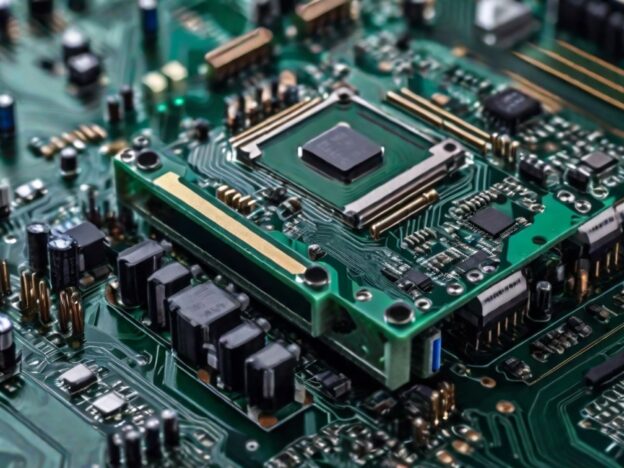
Electronic circuit board

How Turnkey Assembly Services Simplify Electronics Production

In an era where speed, quality, and cost control define competitive advantage, many companies turn to turnkey assembly services to simplify electronics production. Turnkey assembly involves entrusting your entire manufacturing process — from initial design review to final shipment — to a single contract manufacturer. For businesses looking to accelerate time-to-market and minimize operational complexity, turnkey solutions provide a powerful advantage.

Turnkey assembly services differ from traditional contract manufacturing because they encapsulate the complete production lifecycle. Instead of managing sourcing, assembly, inspection, and logistics independently, product teams collaborate with one expert partner that orchestrates every step. This unified approach reduces coordination overhead and minimizes risks associated with fragmented supply chains.

Printed Circuit Board FabricationOne of the most profound benefits of turnkey assembly is integrated supply chain management. Your assembly partner handles component procurement, ensuring parts are sourced from trusted suppliers and delivered on schedule. This eliminates the burden of vendor negotiations, purchase orders, and inventory delays — common pain points for in-house manufacturing teams.
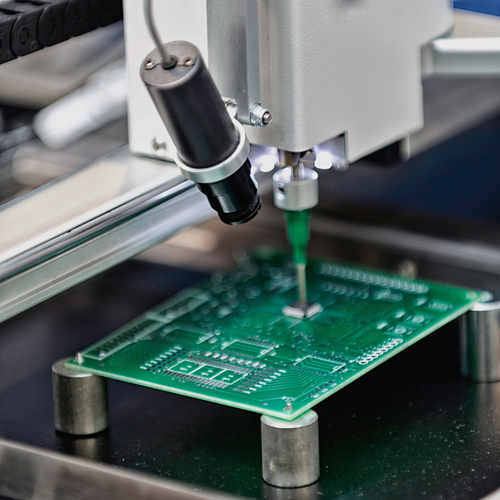
Turnkey services also encompass design for manufacturability (DFM) analysis. Early in the process, experienced engineers review your PCB designs and prototypes, identifying potential assembly challenges and suggesting improvements before tooling or production begins. By addressing issues before they surface on the production line, teams avoid costly revisions and expedite product readiness.

BoardAssembly’s turnkey services build on a foundation of comprehensive electronic manufacturing services (EMS). Whether your project involves surface mount technology, thru-hole assembly, or advanced BGA packages, a turnkey provider coordinates each technology within a structured workflow that ensures quality and consistency.

A key advantage of turnkey assembly is scalability. Whether launching a limited run of prototype boards or preparing for full-scale production, turnkey partners adjust resources and processes to match demand. This scaling ability allows businesses to grow without overinvesting in facilities, staff, or equipment.

Quality assurance is another integral part of turnkey services. Experienced manufacturers employ multi-stage inspection methods — including automated optical inspection (AOI), in-circuit testing, and final functional tests — to ensure every assembly meets specifications. Turnkey partners also provide documentation and traceability, which is particularly crucial for industries with compliance requirements.

For companies with limited manufacturing experience, turnkey solutions act as a trusted extension of the engineering team. By consolidating expertise, oversight, and execution under one roof, teams benefit from reduced lead times, fewer production hiccups, and improved product reliability.

In summary, turnkey assembly services deliver a streamlined, all-inclusive path from concept to manufacturing success. By partnering with experts who manage sourcing, assembly, testing, and delivery, companies focus on innovation and market differentiation. To learn more about BoardAssembly’s turnkey solutions, visit https://boardassembly.com/turnkey-assembly/.

Printed circuit board production

What to Expect from Full-Service Electronic Manufacturing Services (EMS)

In today’s competitive electronics industry, businesses of all sizes depend on electronic manufacturing services (EMS) to transform innovative designs into reliable, market-ready products. An EMS provider handles critical stages of production — from prototype assembly to mass-scale manufacturing — allowing companies to focus on design, marketing, and growth while leaving complex manufacturing details in expert hands.

Electronic Manufacturing Services encompass a wide array of capabilities, including PCB assembly, testing, procurement, and post-production support. By partnering with a full-service EMS provider like BoardAssembly, companies benefit from experienced manufacturing expertise that addresses technical challenges and reduces time to market.

Printed circuit board productionEarly in the product lifecycle, EMS providers support design for manufacturability (DFM) reviews. In this phase, engineers analyze PCB layouts and specifications to identify potential assembly issues, suggest improvements, and ensure components are optimized for manufacturing. This proactive approach minimizes costly revisions and improves end-product quality.
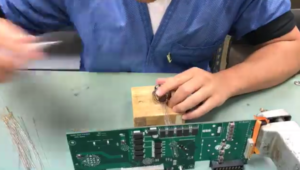
Once a design is manufacturing-ready, the EMS provider manages component sourcing and supply chain logistics, securing parts from reputable vendors and mitigating shortages or long lead times. Strategic sourcing is especially valuable in today’s fluctuating global market, where procurement disruptions can delay production schedules.

PCB assembly is at the core of EMS offerings. Whether your project uses surface mount (SMT), thru-hole, or a combination of technologies, an experienced EMS partner delivers precision assembly and thorough inspection. BoardAssembly’s services include BGA assembly, thru-hole assembly, and advanced soldering techniques to support diverse component types and complex designs.

In addition to assembly, EMS providers implement stringent quality control and testing procedures, ensuring each product meets performance requirements and industry standards. Functional testing, in-circuit testing, and inspection tools like AOI (Automated Optical Inspection) help catch defects early, reducing returns and warranty claims.

For businesses aiming for a complete solution, EMS often includes turnkey assembly, where the provider manages all aspects of production — from design review through final delivery. This hands-off model streamlines operations and often improves cost efficiency through economies of scale and process optimization.

Beyond initial production, top EMS partners offer scalability for growth as demand increases. Whether moving from small-scale runs to full production or supporting redesigns and upgrades, EMS providers like BoardAssembly deliver flexible manufacturing services that keep pace with evolving business needs.

In summary, electronic manufacturing services are a cornerstone of modern electronics product development and production. By leveraging EMS expertise, companies reduce risks, improve quality, and bring innovations to market faster and more efficiently. Explore how EMS can advance your product goals by visiting https://boardassembly.com/ems/.

Box Build Assembly

Box Build vs. PCB Assembly

What’s the Difference and When Do You Need Both?

When it comes to producing electronic devices, PCB assembly and box build are two essential processes that play different but complementary roles in bringing products to life. While many people are familiar with PCB assembly — where components are mounted on a printed circuit board — box build assembly takes it a step further by creating the finished product that’s ready for market.

If you’re wondering what separates a box build from PCB assembly, and when you need both services, this guide will break it down in simple terms.


What Is PCB Assembly?

PCB assembly (Printed Circuit Board Assembly) is the process of placing and soldering electronic components like resistors, capacitors, ICs, and connectors onto a bare circuit board. This process can involve surface mount technology (SMT), through-hole technology, or a combination of both.

In short, PCB assembly focuses on the brain of the device — the electronic board that powers everything.

Key steps in PCB assembly include:

  • Solder paste application
  • Pick and place of components
  • Reflow soldering or wave soldering
  • Inspection and testing

PCB assembly is essential for any electronic device but does not complete the final product — that’s where box build comes in.


What Is a Box Build?

Box BuildA box build (also known as system integration or electronic box build assembly) involves assembling all the necessary components — including the PCB — into a finished, fully functional product.
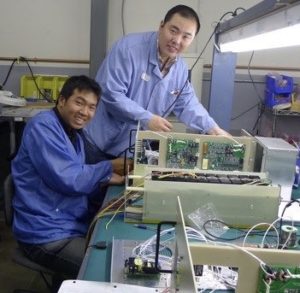
Think of box build as the final stage of electronic manufacturing. Once your PCB is assembled, tested, and functioning, box build assembly packages everything into its enclosure, adds wiring, and includes other mechanical and electrical parts.

Key elements of box build assembly include:

  • Enclosure assembly (metal, plastic, custom housing)
  • Mounting of PCBs, displays, switches, and other modules
  • Wiring and cable harness assembly
  • Installing connectors, power supplies, fans, and other accessories
  • Full system testing and verification

For more about box build services, check out https://boardassembly.com/box-builds/.


Box Build vs. PCB Assembly: What’s the Difference?

Feature PCB Assembly Box Build Assembly
Focus Assembling components on a circuit board Assembling final product including PCB
Includes Only the electronic board and components PCB + wiring, housing, connectors, and more
End Result A working circuit board Fully assembled, ready-to-use product
Additional Work No enclosures, no system integration Full system integration, packaging, labeling
Testing PCB-level electrical tests System-level testing to verify total function

When Do You Need Both PCB Assembly and Box Build?

Most finished electronic products require both PCB assembly and box build to be market-ready. If you are producing any of the following, you will likely need both services:

  • Consumer electronics (smart devices, home gadgets)
  • Medical devices (monitors, diagnostic tools)
  • Industrial equipment (control panels, automation systems)
  • Telecommunication devices (routers, communication boxes)
  • IoT devices (smart sensors, connected devices)

Here’s when both services are essential:

  1. Product Readiness: If you want a product ready for sale or shipment — not just a circuit board — you need box build after PCB assembly.
  2. Complex Wiring Needs: If your device requires wiring, cable assemblies, and mechanical enclosures, a box build is necessary to integrate these parts.
  3. Testing & Compliance: Final system-level testing (functional tests, safety tests) happens during box build, ensuring the product works as intended before it reaches customers.

Why Work with a Partner Who Offers Both?

Choosing a manufacturing partner like Board Assembly that offers both PCB assembly and box build services can save time, reduce costs, and improve quality control. Here’s why:

  • Streamlined communication: Manage one relationship instead of coordinating between separate vendors.
  • Faster turnaround: PCB and box build handled under one roof means fewer delays.
  • Lower costs: Combined services often mean better pricing on components and assembly.
  • Better quality assurance: One team ensures your product is built and tested according to your specifications.

Box BuildWhile PCB assembly focuses on building the electronic board, box build assembly brings all components together into a finished, functional product. Most companies need both services to ensure their devices are ready for customers.

If you’re looking for a reliable partner for box builds and PCB assembly, Board Assembly has the expertise to handle your project from start to finish — simplifying your production process and delivering high-quality results.

Contact Us to Learn More

➡️ Ready to start your next electronic box build or PCB assembly project? Contact Board Assembly today to discuss how we can help streamline your manufacturing and bring your product to life!