Tag Archives: ACME PCB Assembly

Is Through-Hole Assembly Still Important to Use?


Before the 1960s, the through-hole assembly process for mounting components onto printed circuit boards was the only game in town. It was labor-intensive and required a lot of space, but it was the only option. That all changed with the rise of surface mount technology (SMT), which allows for components to be mounted directly onto a printed circuit board’s surface. Since SMT doesn’t require drilling holes through a PCB, its components are much smaller and can be mounted on each side of the board. The result is a denser, smaller PCB that can perform much better than a PCB using through-hole technology.

When SMT came on the scene, many engineers believed it would harken the death of through-hole PCBs. However, while SMT does reign supreme, through-hole is still with us today. In very specific circumstances, through-hole PCBs are a better choice than their SMT counterparts.

A Few Important Uses for Through-Hole PCBs

Through-hole PCBs may be bigger and clunkier than SMT PCBs, but they do offer up one important advantage. Through-hole components are attached far more securely than SMT, which gives them a much stronger connection between layers. SMT connections are strong enough for the vast majority of products that people use in their day-to-day lives, but for machines that must operate in extreme environments, through-hole is the more reliable and stable option.

For example, through-hole PCBs can be commonly found in machines in the military and aerospace industries. Oftentimes, these machines must survive extreme temperatures, forceful collisions, and rapid accelerations. Through-hole is the ideal reliable and resilient mounting option for these types of products.

Prototypes

The other area where you are most likely to find through-hole mounting is in product prototypes. Through-hole is often preferred in prototyping, because it is much easier to adjust and replace components as the prototype undergoes testing and design alterations. If you are dreaming up an exciting new product, you’ll want to reach out to a printed circuit board vendor that is adept at through-hole mounting. This will give you more flexibility as you put the prototype through its paces.
Find Your SMT and Through-Hole Vendor

No matter what your industry or product line, it is smart to look for a printed circuit board manufacturer with both SMT and through-hole experience. This will allow you more choice and more control over your final product. At ACME PCB Assembly, we offer extensive experience in both SMT assembly and through-hole assembly.
Contact Us Today!

ROHS-Compliant Assembly Services USA

How Being RoHS-Compliant PCB Assembly Services are Different from Assembly Services?

With everyone’s increasing concerns on the over usage of hazardous materials in the electronic and electrical products and their environmental impact, there have been several stricter regulations being imposed by the leading governmental organizations across the world. The RoHS compliance is one of those important regulations that is currently being imposed on the utilization of hazardous materials in the electronics and electrical products. Are you interested in knowing how this compliance works or what the benefits are?
Being Able to Understand the Materials that are Restricted Under RoHS Compliance

The RoHS compliance has restricted the use of six materials in the PCBs and electronic items. They include Mercury (Hg), Lead (Pb), Cadmium (Cd), Hexavalent Chromium (CrVI), polybrominated diphenyl ethers (PBDE), Polybrominated biphenyls (PBB), and phthalates such as BBP, DEHP, BBP, and DIBP.

The compliance also specifies the maximum levels of these restricted materials in the PCBs and other electronics items.

  1. Mercury (Hg): < 100 ppm
  2. Lead (Pb): < 1000 ppm
  3. Cadmium (Cd): < 100 ppm
  4. Polybrominated Biphenyls (PBB): < 1000 ppm
  5. Hexavalent Chromium: (Cr VI) < 1000 ppm
  6. Polybrominated Diphenyl Ethers (PBDE): < 1000 ppm
  7. Bis(2-Ethylhexyl) phthalate (DEHP): < 1000 ppm
  8. Dibutyl phthalate (DBP): < 1000 ppm
  9. Diisobutyl phthalate (DIBP): < 1000 ppm
  10. Benzyl butyl phthalate (BBP): < 1000 ppm

The Many Features of RoHS-Compliant Assembly Services

Many PCB assembly services are utilizing processes and technologies that help them manufacture RoHS-compliant PCB assemblies. The following are a few features that help distinguish these services from others.

  • Lead-free Surface Finishes:Many manufacturers are nowadays using lead-free surface finishes such as lead-free HASL, ENIG, Electroplated Nickel and Soft (Bondable), Hard Gold Immersion Tin (White Tin), and Organic Solderability Preservatives (OSP).
  • RoHS Compliant Substrate Materials:The choice of RoHS material depends on the requirement of the application. There are materials such as Isola IS410, and Polyclad 370HR that assure standard electrical performance; however, materials such as Isola FR415 and Polyclad Getek assure high electrical performance at low loss.
  • Primary and Secondary Services:It has been observed that many RoHS PCB assembly service providers specialized in primary and secondary services such as lead trimming, lead-free wave soldering, and many more.

Some Benefits of Using RoHS-Compliant PCBs

The benefits that are offered by lead-free and RoHS-compliant PCBs are various. The following are a few of them:

  • Helps Reduce Metal Poisoning:As the technology landscape is fast evolving, many customers are discarding their obsolete electronic equipment in landfills. Equipped with various hazardous materials, this equipment helped lead to severe poisoning. Although recycling is being performed, still the equipment may have hazardous substances in them. The RoHS directive has forced OEMs reduce their dependence on hazardous substances. This has helped reduce the impact of these materials on the environment, and people working with them.
  • Improved Product Safety:With RoHS compliance being adopted by many prominent electronics manufacturers in EU and the US, now users can be assured that the product they are using is lead and mercury free. As a result, the sales and popularity of the products from these manufacturers has tremendously increased.
  • Improved Thermal Properties:It is proven that lead-free PCBs have excellent thermal properties than their leaded counterparts. They can easily withstand temperatures between -45°C to 145°C. Nowadays, PCB manufacturers are using specialized halogen-free laminates that have further helped improve their thermal stability up to 300 °C.

The benefits of RoHS-compliant PCBs symbolize a green future.  It is important that you find a trusted RoHS-compliant assembly services provider such as Yun Industrial and ACME PCB Assembly. Our company follows processes that are audited regularly and certified as chemical free.

Call today to find out more about our RoHS-compliant assembly services. 


Printed Circuit Boards

What is a PCB Silkscreen on Printed Circuit Boards?

If you grew up taking apart radios, computers, or video game consoles just to see how they worked, you’ve likely studied a printed circuit board (PCB) up close. Among the intricate metallic traces and soldered components, you might have noticed small white letters, numbers, and symbols printed across the board’s surface. These markings aren’t random—they’re part of a critical layer called the PCB silkscreen.

Understanding the PCB Silkscreen Layer

The PCB silkscreen is a printed layer that provides human-readable information on a circuit board. Typically created with special inks, the silkscreen identifies important features such as:

  • Component reference designators (like R1, C5, U2)

  • Test points

  • Warning symbols

  • Company logos

  • Part numbers and date codes

  • Polarity indicators for diodes, LEDs, and capacitors

Most PCB silkscreens are printed in white ink because it contrasts clearly with the traditional green solder mask. However, silkscreen inks can also be black, red, blue, or yellow, depending on the board’s color scheme or specific customer requests.

Why Is the Silkscreen Important?

The silkscreen acts as a visual guide for anyone who assembles, repairs, or tests the PCB. It tells workers how components should be placed and identifies key features to assist in troubleshooting and maintenance. Without a clear silkscreen, identifying the purpose or placement of components could quickly become confusing, leading to costly mistakes or longer assembly times.

Additionally, the silkscreen enhances safety by marking high-voltage areas or other hazards clearly.

How Silkscreens Are Applied

Printed Circuit Board FabricationAdding the silkscreen is typically the final step in PCB fabrication, done while the boards are still panelized. The ink used must be carefully chosen to withstand the chemicals and heat involved in soldering and assembly. Once printed, the board moves to the final finishing or routing phase.
There are several methods for applying a silkscreen:

  • Manual Screen Printing: Traditional, cost-effective for low-volume runs

  • Liquid Photo Imaging (LPI): Offers higher precision for dense, complex boards

  • Direct Legend Printing (DLP): Uses inkjet printers for extremely accurate and fast printing

Each method is selected based on the PCB’s design complexity, production volume, and budget.

Common Mistakes to Avoid in Silkscreen Design

Even experienced PCB designers can make mistakes when preparing the silkscreen layer. Some key things to watch out for:

  • Avoid printing over pads: Silkscreen ink can interfere with soldering and create defects.

  • Keep text legible: Fonts should be large enough to read easily, even after solder mask application.

  • Allow for registration tolerance: Slight shifts during manufacturing mean text and symbols should have enough spacing to stay clear and readable.

A well-designed silkscreen makes the PCB easier to work with and improves overall product quality.

Turnkey Yun IndustrialTrust ACME PCB for Quality PCB Manufacturing
At ACME PCB, we take pride in handling every detail of your PCB project—including the silkscreen layer. Our team ensures that every marking is clear, correct, and perfectly aligned, giving you boards that are not only functional but also easier to assemble, maintain, and troubleshoot.


Need a reliable PCB manufacturer that gets the details right? Contact ACME PCB today to get started!

How to Choose the Right Printed Circuit Board for Your Application

Printed Circuit Boards (PCBs) are at the heart of nearly every electronic device we use today—from smartphones and medical monitors to aerospace controls and industrial machines. Choosing the right PCB for your specific application isn’t just about picking the cheapest option—it’s about ensuring your product functions reliably, efficiently, and safely.

So how do you know which type of PCB is right for your needs? Let’s walk through the key factors to consider when selecting a PCB during the PCB Fabrication process.


Printed Circuit Board Fabrication1. Understand Your Application Requirements
Start by clearly identifying the role the PCB will play in your device. Ask yourself:

  • Will the board be used in a high-temperature environment?
  • Does it need to be flexible or rigid?
  • Will it handle high frequencies or power loads?
  • Are there space constraints or weight limits?

Understanding the physical and functional demands of your application will help guide your PCB design, material choices, and layout.

2. Choose the Right Type of PCB

There are several types of Printed Circuit Boards, each serving different purposes:

  • Single-sided PCBs – Great for simple, low-cost electronics like calculators and toys.
  • Double-sided PCBs – Common in consumer electronics where moderate complexity is needed.
  • Multi-layer PCBs – Ideal for high-performance, compact designs like smartphones, servers, and aerospace tech.
  • Rigid PCBs – Best for durable, permanent structures.
  • Flexible PCBs – Perfect for wearables, medical devices, or curved applications.
  • Rigid-Flex PCBs – Used in high-performance electronics that require both flexibility and strength.

The right type depends on both your performance needs and your product’s design limitations.


3. Select the Proper Materials

In PCB Fabrication, the choice of materials affects durability, conductivity, heat resistance, and cost. Common materials include:

  • FR-4 – A widely used fiberglass-reinforced epoxy laminate; affordable and versatile.
  • Polyimide – Offers better flexibility and heat resistance, great for aerospace and military uses.
  • Ceramic – Provides high thermal conductivity and is used in high-frequency or high-power applications.

Choosing the right substrate and copper thickness is crucial to match your performance and environmental needs.


4. Consider Signal Integrity and Thermal Management

For applications involving high-speed signals or high power, signal integrity and heat dissipation become critical. Your PCB layout, trace widths, spacing, and use of thermal vias must be optimized to prevent overheating and maintain performance.

This is especially true for industries like automotive, aerospace, and medical—where failure isn’t an option.


5. Work with an Experienced Manufacturer

Your PCB is only as good as the partner who fabricates and assembles it. At BoardAssembly.com, we specialize in high-quality PCB Fabrication tailored to your application’s unique needs. Whether you’re working on a prototype or full production run, we deliver precision, reliability, and expert support throughout the process.


Electronic circuit boardChoosing the right Printed Circuit Board isn’t just a technical decision—it’s a strategic one. By understanding your application, selecting the right materials, and working with a trusted manufacturer, you’ll set your project up for long-term success.

Ready to get started? Visit our PCB Fabrication page to learn more about our capabilities or contact us to discuss your project.

ACME Go Green for the Environment

ACME PCB Assembly: A Greenhouse for Sustainable Electronic Manufacturing

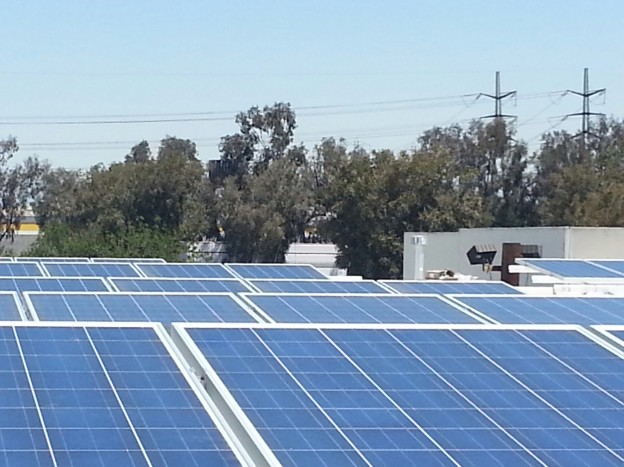
BGA assemblyACME PCB Assembly is setting a remarkable example of sustainability in electronic manufacturing by leveraging renewable energy. Their solar panel system, which generates 64.2KW, offers incredible environmental benefits. Over the next 30 years, this PV system is projected to offset 4,136,092 pounds of CO2 emissions, reduce particulates linked to asthma by 817 pounds, and equate to taking 21.8 cars off the road for 25 years or planting 35.5 acres of trees. Impressive, isn’t it? A well-deserved round of applause for ACME PCB Assembly!

The drive to “go green” stems from more than just a desire to conserve nature. It’s about fostering economic growth, ensuring social and physical well-being, and securing a sustainable future. As industries like electronics heavily rely on natural resources, the shift to eco-conscious practices is both necessary and urgent.

According to EcoWatch, the depletion of resources vital to powering economies and improving livelihoods is an escalating environmental and economic concern. Non-renewable materials, essential for many industries, are being exhausted at alarming rates. Even renewable resources face challenges, as their replenishment often requires significant time. The experts emphasize the pressing need for industries to adopt sustainable strategies to mitigate these risks.

Why Sustainability Matters

The electronics industry relies heavily on natural resources, making the shift to sustainable practices both urgent and necessary. According to environmental experts, the depletion of non-renewable resources is accelerating, while even renewable resources require significant time to replenish. Without action, industries risk exhausting the materials vital to powering economies and improving livelihoods.

At ACME PCB Assembly, we recognize this challenge and are taking proactive steps to address it. By adopting green manufacturing practices, we’re not only conserving resources but also inspiring others to follow suit.

Join the Green Revolution

Sustainability is the future of manufacturing, and ACME PCB Assembly is leading the way. By leveraging renewable energy and eco-friendly processes, we’re proving that innovation and environmental responsibility go hand in hand.

Learn more about how we’re transforming electronic manufacturing at ACME PCB Assembly. Together, we can build a greener, more sustainable future.

At ACME PCB Assembly, sustainability is not just a buzzword—it’s an operational standard. By integrating green practices into their processes, they are not only reducing their ecological footprint but also inspiring others to follow suit.

Curious to learn more about how ACME PCB Assembly is leading the way in green electronic manufacturing? Contact us today and discover how sustainability can power innovation.

Contact us for more information how we go green in our processes.