Tag Archives: PCB manufacturing

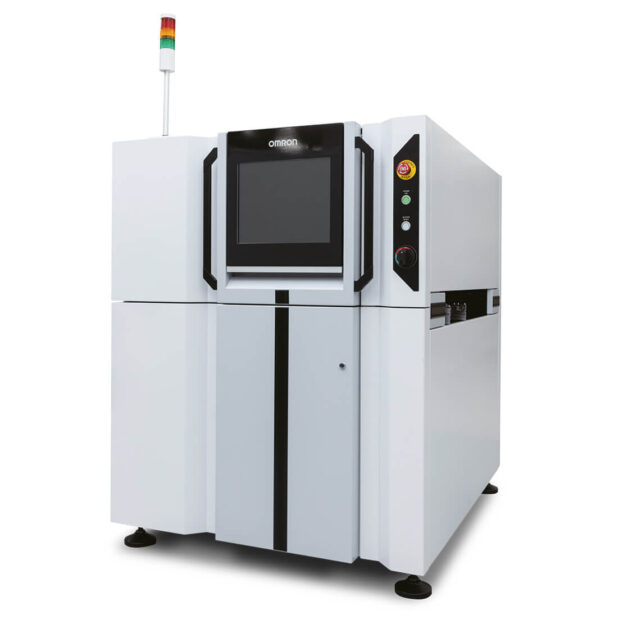
Strengthening SMT Assembly Quality with Omron 3D AOI S1080

We are proud to announce the addition of the Omron 3D AOI S1080 system to our production line, a major investment dedicated to maintaining and enhancing the highest standards of SMT assembly quality. As electronic products continue to evolve toward miniaturization, higher complexity, and greater reliability requirements, the importance of consistent inspection and process control has never been more critical.
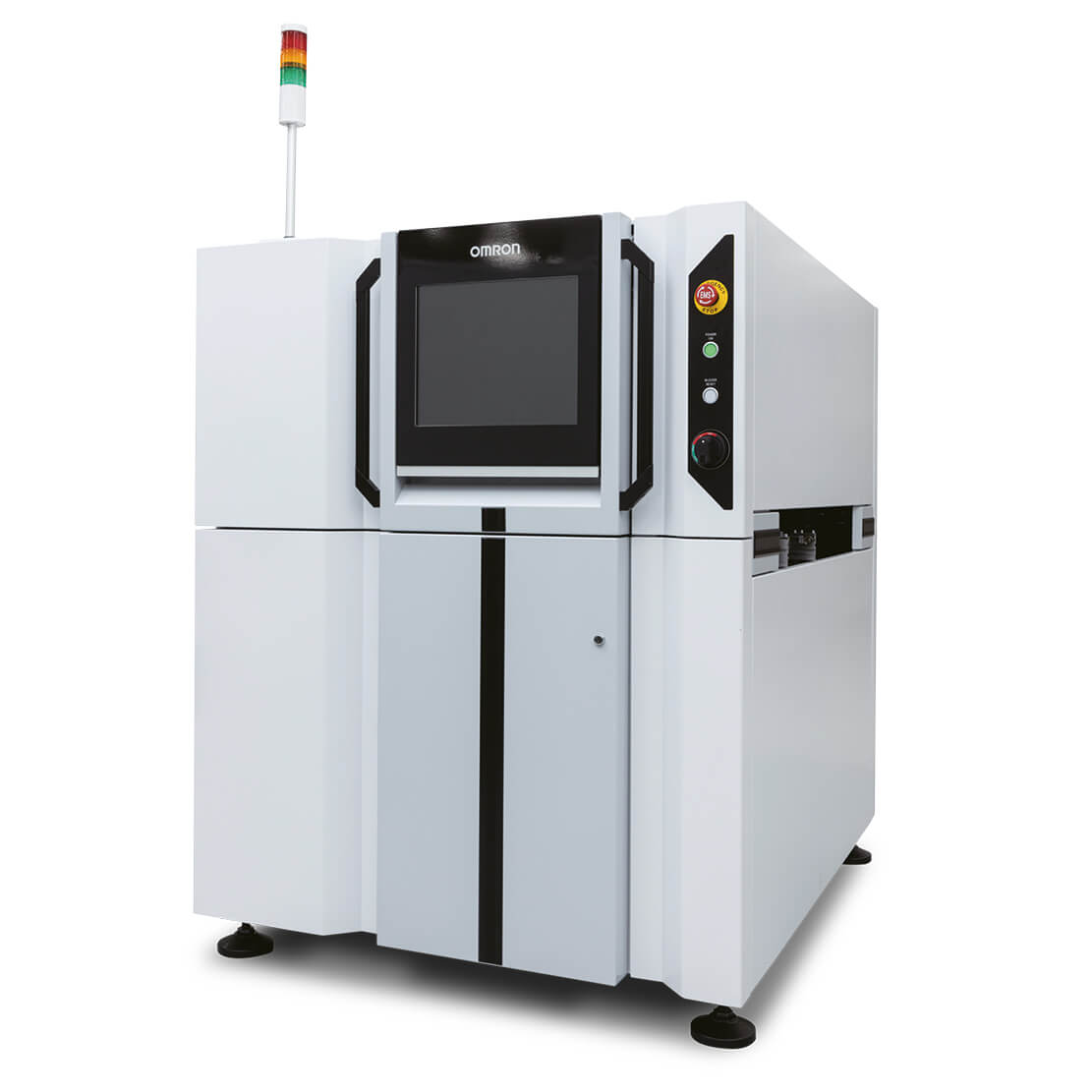
The Omron S1080 represents the latest generation of 3D Automated Optical Inspection (AOI) technology. With advanced 3D imaging, precise height measurement, and intelligent defect detection algorithms, it ensures that every solder joint, component placement, and fine-pitch assembly meets strict quality standards. Unlike traditional 2D AOI, the 3D system eliminates false calls caused by shadows or reflections and provides accurate detection of defects such as insufficient solder, lifted leads, bridging, and coplanarity issues.


By integrating the S1080 directly into our SMT assembly workflow, we gain real-time feedback that allows us to identify potential process variations before they affect product quality. This supports our continuous improvement initiatives, minimizes rework, and reduces costs for our customers. The inspection data collected also enables comprehensive traceability and analytics, giving us the ability to refine our process parameters and further enhance efficiency.


For customers, the addition of Omron’s S1080 means greater confidence in product reliability. Whether the project requires high-mix low-volume builds or high-volume production, this 3D AOI system helps us ensure that each board delivered is manufactured with precision and consistency. Our commitment goes beyond simply meeting industry standards—we aim to exceed them by implementing state-of-the-art tools that safeguard quality at every stage of SMT assembly.


With the Omron 3D AOI S1080 in place, we reaffirm our focus on quality, innovation, and customer satisfaction. This strategic investment reflects our ongoing mission: to provide manufacturing services that combine world-class technology with rigorous quality assurance, ensuring that every product leaving our facility embodies reliability and excellence.
thru hole YUN INDUSTRIAL

Why Consider Using Through Hole Printed Circuit Boards?

Why Consider Using Through Hole Printed Circuit Boards?

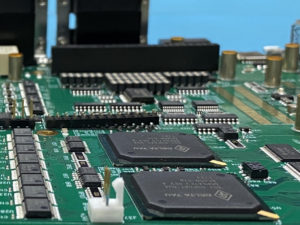
In the printed circuit board business, there are two primary ways to mount components onto the circuit board: through-hole mounting and surface mounting. Through-hole mounting is the older technology and requires the circuit board manufacturer to drill holes through the PCB and place leads into the holes. More recently, surface mounted technology has taken over the field.
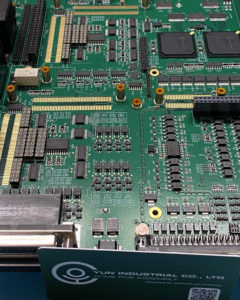
Through-Hole Components

Through-hole components come in one of two types of leads, radial and axial. Axial through-hole components run along the axis of symmetry of the component while radial components protrude in parallel from the same surface on a board.

Components of Surface Mount Technology

When you look at any modern PCB design, you will see SMT technology in most instances. Surface mount technology (SMT) is the most commonly used technology today. These types of boards and components have very small or no leads at all as their primary purpose is to be soldered directly on the surface of a PCB during the design process. This method allows for components to be much smaller, allowing for greater density and better overall performance on a smaller circuit board.

With surface mounting offering so many benefits, why even consider through hole flex printed circuit boards?

The reason is that through hole mounting offers stronger mechanical bonds. This makes through hole flex printed circuit boards the better option for devices that are designed to undergo major stresses, like sudden accelerations, collisions, or extreme temperatures. This makes them worth considering for military, automotive, and extreme sports applications.

Yun Industrial Acme PCB Assembly is capable of two types of printed circuit board assembly services. They are full and partial turn-key services. Full turn-key covers all aspects of PCB fabrication and assembly, including manufacture of PCBs, parts procurement, quality inspections, and final PCB assembly.

Is Through-Hole Assembly Still Important to Use?


Before the 1960s, the through-hole assembly process for mounting components onto printed circuit boards was the only game in town. It was labor-intensive and required a lot of space, but it was the only option. That all changed with the rise of surface mount technology (SMT), which allows for components to be mounted directly onto a printed circuit board’s surface. Since SMT doesn’t require drilling holes through a PCB, its components are much smaller and can be mounted on each side of the board. The result is a denser, smaller PCB that can perform much better than a PCB using through-hole technology.

When SMT came on the scene, many engineers believed it would harken the death of through-hole PCBs. However, while SMT does reign supreme, through-hole is still with us today. In very specific circumstances, through-hole PCBs are a better choice than their SMT counterparts.

A Few Important Uses for Through-Hole PCBs

Through-hole PCBs may be bigger and clunkier than SMT PCBs, but they do offer up one important advantage. Through-hole components are attached far more securely than SMT, which gives them a much stronger connection between layers. SMT connections are strong enough for the vast majority of products that people use in their day-to-day lives, but for machines that must operate in extreme environments, through-hole is the more reliable and stable option.

For example, through-hole PCBs can be commonly found in machines in the military and aerospace industries. Oftentimes, these machines must survive extreme temperatures, forceful collisions, and rapid accelerations. Through-hole is the ideal reliable and resilient mounting option for these types of products.

Prototypes

The other area where you are most likely to find through-hole mounting is in product prototypes. Through-hole is often preferred in prototyping, because it is much easier to adjust and replace components as the prototype undergoes testing and design alterations. If you are dreaming up an exciting new product, you’ll want to reach out to a printed circuit board vendor that is adept at through-hole mounting. This will give you more flexibility as you put the prototype through its paces.

Find Your SMT and Through-Hole Vendor

No matter what your industry or product line, it is smart to look for a printed circuit board manufacturer with both SMT and through-hole experience. This will allow you more choice and more control over your final product. At ACME PCB Assembly, we offer extensive experience in both SMT assembly and through-hole assembly.

Contact Us Today!

ROHS-Compliant Assembly Services USA

How Being RoHS-Compliant PCB Assembly Services are Different from Assembly Services?

With everyone’s increasing concerns on the over usage of hazardous materials in the electronic and electrical products and their environmental impact, there have been several stricter regulations being imposed by the leading governmental organizations across the world. The RoHS compliance is one of those important regulations that is currently being imposed on the utilization of hazardous materials in the electronics and electrical products. Are you interested in knowing how this compliance works or what the benefits are?

Being Able to Understand the Materials that are Restricted Under RoHS Compliance

The RoHS compliance has restricted the use of six materials in the PCBs and electronic items. They include Mercury (Hg), Lead (Pb), Cadmium (Cd), Hexavalent Chromium (CrVI), polybrominated diphenyl ethers (PBDE), Polybrominated biphenyls (PBB), and phthalates such as BBP, DEHP, BBP, and DIBP.

The compliance also specifies the maximum levels of these restricted materials in the PCBs and other electronics items.

  1. Mercury (Hg): < 100 ppm
  2. Lead (Pb): < 1000 ppm
  3. Cadmium (Cd): < 100 ppm
  4. Polybrominated Biphenyls (PBB): < 1000 ppm
  5. Hexavalent Chromium: (Cr VI) < 1000 ppm
  6. Polybrominated Diphenyl Ethers (PBDE): < 1000 ppm
  7. Bis(2-Ethylhexyl) phthalate (DEHP): < 1000 ppm
  8. Dibutyl phthalate (DBP): < 1000 ppm
  9. Diisobutyl phthalate (DIBP): < 1000 ppm
  10. Benzyl butyl phthalate (BBP): < 1000 ppm

The Many Features of RoHS-Compliant Assembly Services

Many PCB assembly services are utilizing processes and technologies that help them manufacture RoHS-compliant PCB assemblies. The following are a few features that help distinguish these services from others.

  • Lead-free Surface Finishes:Many manufacturers are nowadays using lead-free surface finishes such as lead-free HASL, ENIG, Electroplated Nickel and Soft (Bondable), Hard Gold Immersion Tin (White Tin), and Organic Solderability Preservatives (OSP).
  • RoHS Compliant Substrate Materials:The choice of RoHS material depends on the requirement of the application. There are materials such as Isola IS410, and Polyclad 370HR that assure standard electrical performance; however, materials such as Isola FR415 and Polyclad Getek assure high electrical performance at low loss.
  • Primary and Secondary Services:It has been observed that many RoHS PCB assembly service providers specialized in primary and secondary services such as lead trimming, lead-free wave soldering, and many more.

Some Benefits of Using RoHS-Compliant PCBs

The benefits that are offered by lead-free and RoHS-compliant PCBs are various. The following are a few of them:

  • Helps Reduce Metal Poisoning:As the technology landscape is fast evolving, many customers are discarding their obsolete electronic equipment in landfills. Equipped with various hazardous materials, this equipment helped lead to severe poisoning. Although recycling is being performed, still the equipment may have hazardous substances in them. The RoHS directive has forced OEMs reduce their dependence on hazardous substances. This has helped reduce the impact of these materials on the environment, and people working with them.
  • Improved Product Safety:With RoHS compliance being adopted by many prominent electronics manufacturers in EU and the US, now users can be assured that the product they are using is lead and mercury free. As a result, the sales and popularity of the products from these manufacturers has tremendously increased.
  • Improved Thermal Properties:It is proven that lead-free PCBs have excellent thermal properties than their leaded counterparts. They can easily withstand temperatures between -45°C to 145°C. Nowadays, PCB manufacturers are using specialized halogen-free laminates that have further helped improve their thermal stability up to 300 °C.

The benefits of RoHS-compliant PCBs symbolize a green future.  It is important that you find a trusted RoHS-compliant assembly services provider such as Yun Industrial and ACME PCB Assembly. Our company follows processes that are audited regularly and certified as chemical free.

Call today to find out more about our RoHS-compliant assembly services. 


pcb-fabrication-and-assembly-in-usa

How to Choose the Right PCB Material for Your Application

When it comes to electronic products, the materials you choose for your printed circuit board (PCB) can make all the difference in performance, reliability, and even cost. Selecting the right PCB material isn’t just about picking what’s readily available; it’s about matching the material’s properties to your specific application. At Board Assembly, we understand the importance of PCB material selection and are here to help you navigate the options.

Why PCB Material Matters

Your PCB is the backbone of your electronic device. It carries electrical signals, manages heat, and supports all your components. The wrong material choice can lead to issues like signal loss, overheating, or even mechanical failure. That’s why understanding your project’s requirements is key to making the right choice.

Factors to Consider

  1. Thermal Performance:
    If your application generates a lot of heat—like in power electronics or LED lighting—you’ll need a PCB material with good thermal conductivity. Materials like aluminum-based PCBs or high-Tg FR-4 are excellent choices.

  2. Electrical Performance:
    For high-frequency or RF applications, you’ll need a material with low dielectric loss. PTFE-based materials are often recommended for their superior electrical properties.

  3. Mechanical Strength:
    Will your PCB be exposed to vibrations, shock, or mechanical stress? If so, choose materials with higher mechanical strength to avoid cracks and failures.

  4. Cost:
    Budget matters too. While advanced materials like Rogers or ceramic substrates offer excellent performance, they can be pricey. For many applications, standard FR-4 remains a reliable and cost-effective option.

  5. Environmental Conditions:
    Consider the environment your PCB will operate in. Will it face moisture, chemicals, or extreme temperatures? Some materials offer better resistance to harsh conditions.

Trust Board Assembly with Your PCB Needs

At Board Assembly, we guide our customers through every step of the PCB material selection process. Our team helps you find the perfect balance between performance and budget, ensuring your project is a success.

📞 Contact us today to learn more about our services and how we can help you choose the best PCB material for your application.