Author Archives: Erin

Printed circuit board production

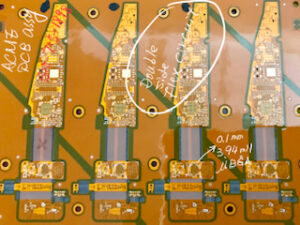
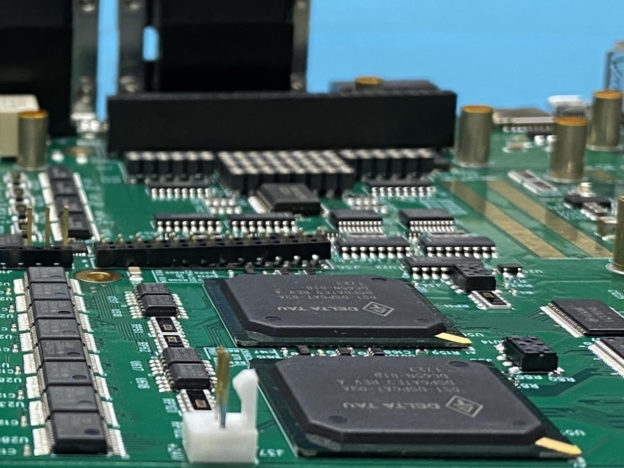
uBGA Assembly on Double Sided Flex Circuit Board

There are many benefits of uBGA Assembly on Double Sided Flex Circuit Board offered by the Acme PCB Assembly, beginning with the fact it can considerably improve the physical characteristics of a design by reducing both weight and size. The cost and performance advantages of using uBGA Assembly on Double Sided Flex Circuit Boards are also quality points that engineers and designers keep in mind, since this technology is used in many types of industries.

ACCURATE, EFFICIENT uBGA ASSEMBLY ON DOUBLE SIDED FLEX CIRCUIT BOARD

A correctly constructed uBGA assembly on double sided flexible circuit board is at the heart of many successful product production operations. Flexible Circuit board assembly and design is a complex, specialized process, which is why many companies choose to outsource this task to a PCB assembly provider that has the capability to get the job done properly and promptly. If you need high-grade uBGA Assembly on flexible printed circuit board that results in a high-performance solution to your manufacturing requirements, Acme PCB Assembly can help.

If you need help with Ball Grid Array (BGA/uBGA) assembly on a double sided flex circuit boards contact us today and we can give you a quote for your next project.

DOUBLE SIDED FLEX CIRCUIT BOARD PERFORMANCE VS RIGID PCB

  • Superior heat dissipation.
  • Dynamic Flexing.
  • Lower inductance (vs traditional wiring systems).
  • Superior package density.

Flexible Circuit boardPRINTED CIRCUIT BOARD ASSEMBLY COMPANY TO MEET YOUR DEADLINES

ACME PCB Assembly uses the most advanced equipment for the development and manufacturing of high performance uBGA Assembly on Double Sided Flex Circuit Board . ACME PCB Assembly has equipment and processes which allow us to offer our customers a flexible, cost-effective, and quality-focused assembly. ACME understands the challenges companies face for their projects. ACME Flexible PCB Assembly is able to accommodate large orders while getting the work done within the the time expected.

To find out more, call us at 310-715-1898

BGA inspection

Ball Grid Array (BGA) Assembly: High-Density SMT Solutions from ACME PCB

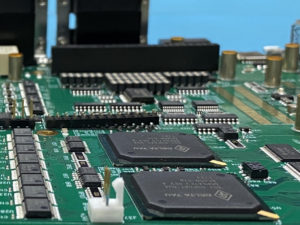
A Ball Grid Array (BGA) is a type of Surface Mount Technology (SMT) packaging widely used for integrated circuits (ICs) that require a large number of interconnects. BGA packaging allows for a compact, high-density design, enabling the integration of more functions on a single chip module—making it an essential component in today’s modern electronics.

What Makes BGA Technology So Effective?

BGAInstead of using pins like traditional packages, a BGA uses an array of solder balls on the underside of the component. These balls create electrical connections during reflow soldering, improving both thermal conductivity and electrical performance. The result is a more robust, space-efficient, and reliable PCB assembly.

Key advantages of BGA packaging include:

  • Reduced board thickness – ideal for smartphones, tablets, and compact electronics

  • Enhanced mechanical durability – no fragile pins to bend or break

  • Improved thermal and electrical performance – essential for high-speed systems

  • Minimal maintenance requirements

  • Excellent compatibility with high-efficiency system designs

ACME PCB: Decades of Experience in BGA Assembly

At ACME Printed Circuit Board Assembly, we’ve offered BGA assembly and rework services since 1994. With advanced X-ray inspection systems and IPC-compliant processes, we provide precision BGA assembly on boards up to 65mm² and up to 36 layers.

Whether you need a production run or BGA prototype assembly, we can accommodate your needs—with or without stencils—to help reduce prototyping costs and accelerate development.

We are an ISO 9001:2015-certified electronics contract manufacturer located in Southern California, near the Los Angeles airport, specializing in small to medium PCB assembly runs. Our team adheres to IPC 610 workmanship standards and is committed to delivering consistent quality and high-yield BGA assemblies.


Need high-performance BGA assembly backed by decades of experience?
📞 Contact us today at 310-715-1898 or email us for more information.

Printed Circuit Boards

What is a PCB Silkscreen on Printed Circuit Boards?

If you grew up taking apart radios, computers, or video game consoles just to see how they worked, you’ve likely studied a printed circuit board (PCB) up close. Among the intricate metallic traces and soldered components, you might have noticed small white letters, numbers, and symbols printed across the board’s surface. These markings aren’t random—they’re part of a critical layer called the PCB silkscreen.

Understanding the PCB Silkscreen Layer

The PCB silkscreen is a printed layer that provides human-readable information on a circuit board. Typically created with special inks, the silkscreen identifies important features such as:

  • Component reference designators (like R1, C5, U2)

  • Test points

  • Warning symbols

  • Company logos

  • Part numbers and date codes

  • Polarity indicators for diodes, LEDs, and capacitors

Most PCB silkscreens are printed in white ink because it contrasts clearly with the traditional green solder mask. However, silkscreen inks can also be black, red, blue, or yellow, depending on the board’s color scheme or specific customer requests.

Why Is the Silkscreen Important?

The silkscreen acts as a visual guide for anyone who assembles, repairs, or tests the PCB. It tells workers how components should be placed and identifies key features to assist in troubleshooting and maintenance. Without a clear silkscreen, identifying the purpose or placement of components could quickly become confusing, leading to costly mistakes or longer assembly times.

Additionally, the silkscreen enhances safety by marking high-voltage areas or other hazards clearly.

How Silkscreens Are Applied

Printed Circuit Board FabricationAdding the silkscreen is typically the final step in PCB fabrication, done while the boards are still panelized. The ink used must be carefully chosen to withstand the chemicals and heat involved in soldering and assembly. Once printed, the board moves to the final finishing or routing phase.

There are several methods for applying a silkscreen:

  • Manual Screen Printing: Traditional, cost-effective for low-volume runs

  • Liquid Photo Imaging (LPI): Offers higher precision for dense, complex boards

  • Direct Legend Printing (DLP): Uses inkjet printers for extremely accurate and fast printing

Each method is selected based on the PCB’s design complexity, production volume, and budget.

Common Mistakes to Avoid in Silkscreen Design

Even experienced PCB designers can make mistakes when preparing the silkscreen layer. Some key things to watch out for:

  • Avoid printing over pads: Silkscreen ink can interfere with soldering and create defects.

  • Keep text legible: Fonts should be large enough to read easily, even after solder mask application.

  • Allow for registration tolerance: Slight shifts during manufacturing mean text and symbols should have enough spacing to stay clear and readable.

A well-designed silkscreen makes the PCB easier to work with and improves overall product quality.

Turnkey Yun IndustrialTrust ACME PCB for Quality PCB Manufacturing

At ACME PCB, we take pride in handling every detail of your PCB project—including the silkscreen layer. Our team ensures that every marking is clear, correct, and perfectly aligned, giving you boards that are not only functional but also easier to assemble, maintain, and troubleshoot.


Need a reliable PCB manufacturer that gets the details right? Contact ACME PCB today to get started!

PCB Assembly service in Los Angeles

Printed Circuit Board Assembly Service Provider

Electronic Contract Manufacturing Service

Acme Printed Circuit Board Assembly (PCB Assembly service provider) is located in Carson, California. We have a 16,000 square foot facility with the best equipment (Fuji assembly line) that allows us to offer high-quality PCB assembly at competitive prices.

Our ISO 9000 (9001:2015) certification is a source of pride for us.  It indicates that we provide measurable high-quality electronic contract manufacturing services that meet or exceed customer expectations.

Whether you need Printed Circuit Board (PCB) assembly, consignment assembly or turnkey material-procurement assembly, we have what is necessary to manage your entire project efficiently. With over 26 years of experience in Electronics Manufacturing Services (EMS) we learned that reasonable assembly cost, high-quality service, on-time delivery and good communications are the keys that keep our customers happy and is how we made our business successful.

ACME PCB Assembly is flexible in meeting your requirements. We have offered Lead-Free (Pb-Free) soldering since 2005. Please review Design to Avoid Tin Wiskers for RoHS compliant (Lead-Free) assembly.

Good communication with our customers is a key to our success. People do business with people because they choose to, not because they have to… You can always find others who provide similar services. We believe that it is the personal connection that makes the difference.

ACME Printed Circuit Board Assembly

Electronic contract manufacturing for printed circuit boards assembly that includes SMT assembly, prototype boards builds, PoP (Package on Package), BGA assembly with X-ray inspection, through-hole and mixed board assembly.

ACME PCB Assembly has a IPC 610 Class III, and IPC J-001 certified instructor in-house for training and quality assurance. As a electronic contract manufacturing service provider, we provide service from product design all the way to box builds. Our services include:


Recycling Unused PCB

Can You Recycle PCBs? Smarter Solutions for Unused Printed Circuit Boards

Printed Circuit Boards (PCBs) are found in nearly every electronic device—and with demand for electronics continuing to rise, PCBs are everywhere. But what happens when those PCBs become obsolete, go unused, or are left over from discontinued product lines? Is PCB recycling even possible?

At ACME PCB Assembly, we’re not only experts in fabrication and assembly—we also offer solutions that can give unused PCBs a second life, reducing waste and supporting sustainability.


Electronic circuit boardWhat Is a PCB, Really?

Before deciding whether a PCB can be recycled, let’s first understand what it’s made of. A standard PCB is a laminated sandwich of:

  • Copper layers

  • FR-4 substrate (a fiberglass reinforced epoxy resin that’s flame resistant)

  • Tin, silver, and even trace amounts of gold

These materials present both opportunities and challenges for recycling. While metals like copper and precious metals are recoverable, the epoxy and fiberglass components are more difficult to process without specialized facilities.


Can You Actually Recycle PCBs?

Yes—and no. While full recycling of PCBs is complicated and energy-intensive, that doesn’t mean your unused PCBs are destined for the landfill.

There are two smart alternatives:

  1. Repurposing and Reworking
    If the PCB hasn’t been populated with components, or even if it has, ACME PCB Assembly may be able to rework, re-solder, or repurpose it for use in a different product.

  2. Recovering Materials
    Certain recycling centers specialize in extracting the copper and precious metals from PCBs. However, this process often requires high heat or chemical treatment and may not be environmentally friendly if done improperly.


Printed Circuit BoardsWhat Electronics Design Engineers Can Do

Designing with sustainability in mind is a growing priority. Here’s how design engineers can help make PCBs more recyclable:

  • Choose materials that are easier to reclaim

  • Avoid overordering—order what you need and scale as you go

  • Design modular boards that can be reused in other product lines

  • Work with a partner like ACME PCB Assembly to review redesign and reuse options


Got Extra PCBs Taking Up Space?

Let’s say you placed a large order of custom PCBs for a now-discontinued product. You’ve got a warehouse full of unused boards, and you’re wondering if it’s time to toss them.

Don’t trash them just yet. Contact ACME PCB Assembly—our expert technicians are highly trained in de-soldering and re-soldering surface-mounted components. We also have specialized equipment to help re-purpose boards for future use, saving you time, money, and environmental impact.


Partner with ACME for Smarter PCB Solutions

Whether you’re looking to recycle, repurpose, or rework unused PCBs, ACME PCB Assembly is here to help. With over 25 years in the PCB industry, we know how to turn leftover parts into new opportunities.

👉 Give us a call today to see how we can help transform your surplus PCBs into the backbone of your next big innovation.