Author Archives: Erin

Printed Circuit Board Fabrication

Printed Circuit Board Manufacturing vs. PCB Assembly: Understanding the Difference

There Are Differences Between Printed Circuit Board Manufacturing and Printed Circuit Board Assembly, But You Might Be Asking What Are They?

In the world of electronics, the terms Printed Circuit Board (PCB) Manufacturing and PCB Assembly are often used interchangeably—but they actually refer to two distinct processes. Understanding the difference is essential when choosing the right partner for your electronic product development.

At Yun Industrial / ACME PCB Assembly, we specialize in both PCB manufacturing and assembly services, ensuring customers receive complete, end-to-end solutions with unmatched quality and precision.

What Is PCB Manufacturing?

PCB manufacturing is the process of creating the physical printed circuit board from scratch. This involves several intricate steps, including:

  • Designing the board layout using CAD software

  • Creating a PCB prototype to test design accuracy

  • Layering copper and insulating materials to form conductive paths

  • Etching, drilling, and plating to create traces and vias

  • Applying solder masks and silkscreens for protection and labeling

Essentially, PCB manufacturing is about producing the bare board—the foundation that will later hold the electronic components. This stage requires high-precision machinery and engineering expertise to ensure the final board meets performance, safety, and durability standards.

What Is PCB Assembly?

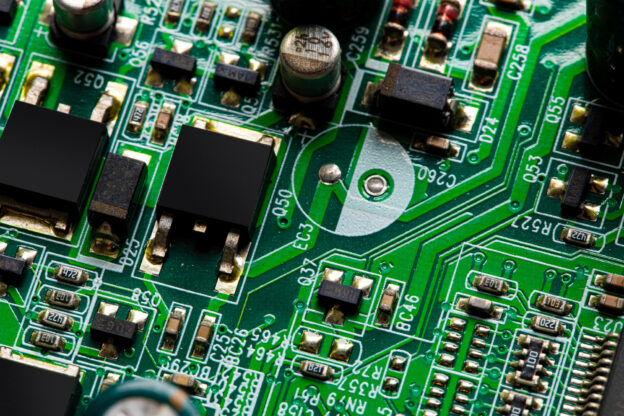
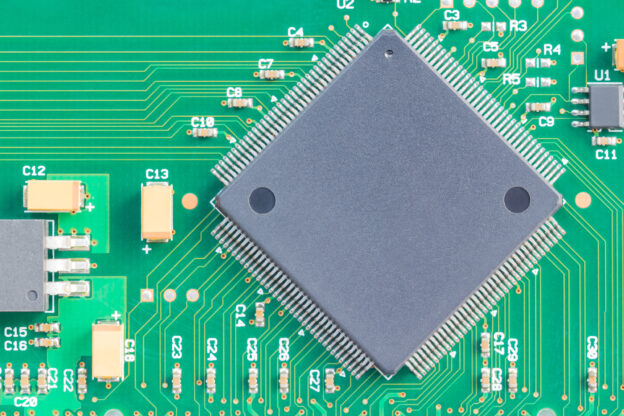
Once the bare board is manufactured, the next step is PCB assembly (PCBA). This is where the circuit board comes to life. The process involves soldering electronic components—such as resistors, capacitors, IC chips, and connectors—onto the PCB according to the design specifications.

PCB assembly can use Surface Mount Technology (SMT), Through-Hole Technology (THT), or a combination of both, depending on the application. This stage requires precise placement, temperature control, and soldering quality to ensure reliable electrical connections and functionality.

ACME PCB Assembly: Your One-Stop PCB Partner

At Yun Industrial ACME PCB Assembly, we provide both manufacturing and assembly services, eliminating the need to work with multiple vendors. As an ISO 9001:2015 certified Electronics Manufacturing Service (EMS) provider and IPC A-610 certified trainer, we uphold the highest industry standards for quality and reliability.

Every PCB we produce meets the strict guidelines of IPC 600, ensuring consistency, durability, and peak performance. Whether you need a prototype or large-scale production, ACME delivers the best value, competitive pricing, and on-time delivery—every time.

Contact us today to learn more about how ACME PCB Assembly can bring your next project from concept to completion.

Contact us today to learn more.

Declaration of Metal Conflict-Free Metal

At Yun Industrial Co., Ltd. dba: ACME PCB Assembly, we are fully committed to ethical sourcing and responsible business practices throughout our entire supply chain. We proudly declare that all metals used in our production processes are Conflict-Free, ensuring that none of our materials contribute to human rights violations or illegal trade activities.

Our Commitment to Responsible Sourcing

ACME PCB Assembly takes a proactive approach to ensure that metals such as Gold (Au), Tungsten (W), Tantalum (Ta), Cobalt (Co), and Tin (Sn) used in our electronic assemblies are not sourced from mines or suppliers involved in conflicts within the Democratic Republic of the Congo (DRC) or neighboring regions. We conduct continuous audits, supplier verifications, and compliance assessments to ensure that all materials are obtained through legitimate and ethical trade channels.

Our team works closely with suppliers who adhere to the guidelines established by the U.S. Dodd-Frank Wall Street Reform and Consumer Protection Act (Section 1502) and the OECD Due Diligence Guidance for Responsible Supply Chains of Minerals from Conflict-Affected and High-Risk Areas.

Verified Conflict-Free Supply Chain

As a U.S.-registered company, ACME recognizes that trade routes originating directly from the DRC or transiting through Rwanda, Burundi, Uganda, Tanzania, and Kenya are classified by the United Nations Security Council as “non–conflict-free.” To maintain transparency and accountability, we ensure that none of our metal sources are connected to these regions or any non-governmental military groups.

We hereby confirm that all metals used in ACME PCB Assembly products are Democratic Republic of Congo Conflict-Free.

Quality, Integrity, and Customer Partnership

Our commitment to conflict-free sourcing reflects our broader mission—to be a trusted partner to our clients by consistently providing superior quality products, competitive pricing, and on-time delivery. As a full-service contract electronics manufacturer, we offer both Surface Mount (SMT) and Thru-Hole (PTH) assembly capabilities, supported by state-of-the-art equipment and a team dedicated to ethical, sustainable production.

By choosing ACME PCB Assembly, customers can have confidence that every board we produce meets the highest standards of quality and integrity—both technically and ethically.

2 BGAs or More vertical installing.

The Rise of Package on Package (PoP) in PCB Assembly

In the ever-evolving landscape of electronics manufacturing, Package on Package (PoP) technology is transforming how circuit boards are designed and assembled. First gaining traction in the early 2000s, PoP is now considered one of the most innovative advances since the introduction of Ball Grid Array (BGA) components in the mid-1990s.

At its core, PoP is an integrated circuit packaging method that vertically stacks two or more BGA packages—typically combining a logic processor and memory component. This space-saving configuration allows for compact, high-performance assemblies ideal for smartphones, wearables, medical devices, and advanced industrial electronics.

The Advantages of PoP Technology

The primary benefit of PoP technology lies in its ability to reduce external pin count through package-level system integration. By stacking chips vertically, engineers can achieve a smaller footprint without sacrificing power or performance. This simplification not only optimizes PCB layout efficiency but also improves overall product reliability by minimizing interconnect lengths and signal interference.

Depending on the configuration, PoP packages can reach a total height as low as 1.4mm, making them perfect for compact devices where every millimeter counts. Additionally, PoP assemblies support independent testing of logic and memory layers, resulting in higher manufacturing yields and easier defect isolation during production.

ACME PCB Assembly: Leading the Way Since 2009

Since 2009, ACME PCB Assembly has been a leader in adopting and refining PoP technology. Utilizing advanced FUJI assembly lines and precise reflow soldering techniques, ACME delivers reliable PoP BGA assemblies for both prototype runs and medium-batch production.

From single-unit builds to production runs of up to 20,000 pieces, ACME’s skilled technicians ensure precise alignment, solder integrity, and quality control at every stage. This allows clients to seamlessly integrate high-density packaging into their next-generation designs—accelerating time to market while maintaining exceptional performance standards.

Whether you’re developing consumer electronics, industrial control systems, or medical devices, PoP technology offers a compact and efficient solution.

Embrace the Future of PCB Assembly

2 BGAs or More vertical installing.

ACME PCB Assembly is your trusted partner for Package on Package assembly, offering experience, precision, and scalability for your most advanced designs. Contact Board Assembly today at 310-715-1898 to learn how PoP can enhance your next project.

Flexible Circuit board

Trends in PCB Technology 2025: HDI, Flexible PCBs & Embedded Components

The world of printed circuit board (PCB) technology is evolving rapidly. As design demands grow denser, smarter, and more compact, three trends are defining the next generation of electronics: High-Density Interconnect (HDI), Flexible & Rigid-Flex PCBs, and Embedded Components. At Board Assembly, we’re keeping a close eye on these advances to ensure our clients stay ahead of the curve.

1. HDI: Packing More into Less

HDI technology enables PCBs with tighter trace spacing, smaller vias, buried and blind vias, and multiple layers of interconnects. These capabilities support miniaturization while maintaining signal integrity. In fact, Ultra-HDI is pushing the envelope even further, with features like microvias smaller than 2 mil and dense layer stacking becoming more commonplace in 2025.

For applications in high-speed communication, computing, and mobile devices, HDI is indispensable. It allows more functionality per square millimeter and reduces signal path length, which helps with high-frequency performance.

2. Flexible & Rigid-Flex PCBs: Form Meets Function

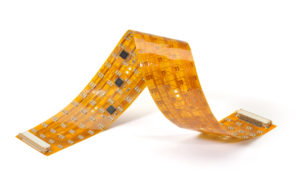
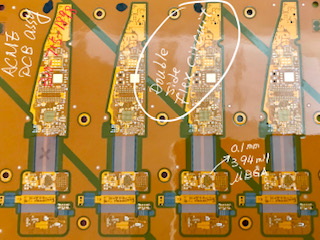
Rigid-flex and flexible PCBs bridge the gap between rigid boards and adaptable electronics. As IoT, wearables, and foldable electronics grow in importance, demand for flexible interconnects is rising sharply.

These flexible circuits allow boards to bend, fold, or conform to shapes, reducing connector count, saving space, and improving reliability. Designers are combining rigid and flex segments into single boards (rigid-flex) to gain mechanical stability where needed and flexibility where required.

In 2025, we’re seeing material innovations: thinner substrates, more durable flex films, and improved adhesion layers, all designed to survive repeated bending cycles and harsh environmental conditions.

3. Embedded Components: The Next Level of Integration

Embedded component technology involves placing passive and sometimes active devices (resistors, capacitors, ICs) within the layers or substrate of a PCB rather than on its surface. This approach reduces board surface complexity, shrinks form factors, and improves performance by shortening signal paths.

By embedding components, PCB designers can reduce external solder joints, minimize parasitic inductance, and better manage circuit density. This trend is especially relevant for compact, performance-sensitive sectors like aerospace, medical devices, and wearable electronics.


Printed Circuit Board FabricationWhy These Trends Matter for Your Projects

  • Smaller form factors: More capability in less space.

  • Better performance: Shorter interconnects, cleaner signal paths, less noise.

  • Reliability & durability: Fewer external interconnects, more mechanically robust designs.

  • Modern applications: These technologies enable cutting-edge devices in AI, 5G, IoT, and more.

At Board Assembly, we support HDI, flexible, rigid-flex, and embedded-component assemblies to meet the demands of tomorrow’s electronics. Whether you’re prototyping or producing in volume, we’re ready to partner with you.

Box Build

Modifying and Reworking Electronic Printed Circuit Boards in USA

In today’s fast-paced electronics industry, there is a constant need for circuit board repair and rework. Whether due to design changes, component failure, or manufacturing defects, restoring and reusing existing printed circuit boards (PCBs) can save significant time and cost. At ACME PCB Assembly, we specialize in providing precise, reliable, and efficient rework and modification services to extend the life of your boards and ensure optimal performance.

Custom Rework Solutions for Every Project

ACME PCB Assembly customizes each project to meet your specific requirements using a wide variety of leading-edge technologies. Our highly skilled technicians can complete standard projects quickly—often within one day of assembly—without compromising quality. We handle everything from small-scale component replacement to complex system-level repairs with exceptional accuracy and attention to detail.

Advanced PCB Repair Techniques

Our rework and repair services include refinishing, de-soldering, and re-soldering of all types of electronic printed circuit boards. Skilled manual techniques are combined with specialized equipment to replace defective or outdated components. This includes complex area array packages such as Ball Grid Array (BGA) devices, which require exceptional precision and temperature control.

We use hot air stations and rework tools to carefully heat solder joints, remove components, and reattach new ones—all while maintaining the integrity of surrounding parts. Our technicians are trained to handle miniature and delicate components, ensuring reliable reflow and alignment during replacement.

Save Money, Reduce Waste

Before you consign your damaged or outdated PCBs to the scrap bin, contact ACME PCB Assembly. Our expert rework and repair services can restore functionality, prevent waste, and save you money. In a market where every dollar counts, no company can afford to discard valuable boards that can be reworked and reused effectively.

Partner with ACME PCB Assembly for dependable repair services that bring your boards back to life. Call us today at 310.715.1898 to discuss your project and learn more about our rapid-turnaround rework solutions.