Author Archives: Erin

Printed Circuit Boards

Is it Possible to Recycle Your Unused Printed Circuit Boards?

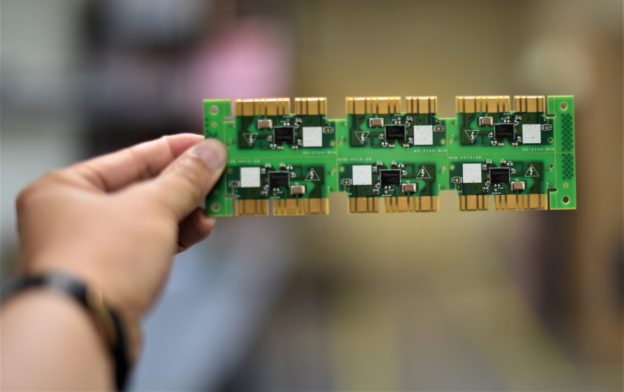
We will be discussing the issue of PCB recycling, if it’s even possible, how it is done and what can we do as electronics design engineers to create more recyclable PCBs. When we say PCB we are meaning a PCB without any components on it.  Most electronic devices found out there have their components sitting in a nice looking Printed Circuit Board or PCB.  Since electronic devices are in high demand, PCBs are everywhere. Making sure their materials can be collected and reused instead of just throwing them into a landfill would potentially be a smart and environmentally sensible move if performed properly.

Remember that large order of printed circuit boards you ordered? You thought it would be a good idea to have a surplus of parts on hand in case you needed to increase production of your product line. Unfortunately, that product got discontinued, so now you have a huge stash of PCBs taking up room in your warehouse and on your accounting books. It is time to trash them?

Not so fast! In many cases, printed circuit boards can be reworked and modified. Do you have another electronic or computerized product in the works? Then contact ACME PCB Assembly  we may be able to re-purpose your PCBs. Our workers are highly trained in de-soldering and re-soldering surface mounted electronic components. We have also invested in specialized equipment that can assist us in these efforts.

Can you recycle your old PCB?

Yes and no, before coming to a final decision let’s first see what a PCB is made of. A PCB is basically a layered sandwich of copper and FR-4. FR-4 is a fiberglass with an epoxy resin that has the purpose of bonding the fiber together and as an adhesive, it is also flame resistant. Apart from that, you can also find tin and small traces of gold and silver.

Don’t throw out unused printed circuit boards.

Give us a call today to learn how we could possibly turn them into components for your next big product!

PCB Assembly service in Los Angeles

Building Your Next Big Idea for 2026

Turn Your Big Idea Into a Prototype

Have you been sitting on a great idea, waiting for the perfect moment to bring it to life? As the New Year approaches, many entrepreneurs start planning for growth, innovation, and new business opportunities. If 2026 is the year you want to finally turn your invention into a reality, you’re not alone—and you don’t have to do it by yourself. While creating a new product can seem overwhelming, there are experienced companies and manufacturing partners ready to help you through every stage of development.

pcb-prototypeOne of the most important steps in bringing any new electronic device to market is completing the prototype phase. A prototype doesn’t just prove that your idea can work; it becomes the foundation for improving your design, testing functionality, pitching investors, and preparing for manufacturing. At ACME PCB Assembly, we specialize in helping inventors, entrepreneurs, and start-ups build the printed circuit boards (PCBs) their products depend on.
If you’re unsure about the exact schematics or specifications needed for your PCB design, that’s completely normal. Many innovators come to us with only a concept. Our team guides you from the earliest planning stages through schematic design, PCB layout, and full board assembly. When it comes to the rest of your invention—housing, mechanical components, or product finishing—other vendors can step in to complete your final prototype. ACME’s goal is to ensure that the electronic heart of your device is built correctly, efficiently, and with the quality required for successful testing.

Before long, you’ll have a working prototype in hand—something you can show investors, demonstrate to potential partners, test in real environments, or use to prepare for production. ACME PCB Assembly serves as your reliable resource for prototype Printed Circuit Board Assembly (PCBA). Our certified IPC trainer ensures that every prototype meets industry quality standards. We can assemble boards by hand for low-quantity builds ranging from a single unit up to 50 pieces, ideal for early testing phases.

When you’re ready to scale, ACME PCB Assembly offers smooth transition into higher-volume production. Our FUJI SMT pick-and-place line allows us to handle runs from 1-piece prototypes up to 10,000-piece production batches. Few PCB partners offer such flexibility, making ACME the ideal choice for both early-stage innovators and growing companies.

ACME provides a complete suite of PCB Assembly Services, including SMT, Through-Hole, BGA, rework, lead-free assembly, turnkey solutions, and more. We also offer additional manufacturing support such as Injection Molding and Metal Work & Finishing—giving clients access to an end-to-end approach when preparing their products for market.

We provide a complete suite of PCB Assembly Services, including rework and modification, BGA, SMT, Turnkey, Thru-Hole, Lead Free, and Prototype assembly, plus an extensive line of add-on services, such as Injection Molding and Metal Work & Finishing.  ACME PCB Assembly has been providing Electronic Manufacturing Services (EMS) and Printed Circuit Board (PCB) assembly for 27 years.

Ready to turn your idea into a prototype? Visit our PCB assembly service page and get started today:

Contact us today to get started prototyping the printed circuit boards you need.

Wire Harness

ACME PCB Assembly Wire and Cable Harness Services

It is important to understand that a wire harness is different than a cable harness.  A wire is a single conductor, while cables are two or more wires that are insulated being wrapped in a larger jacket. These two technologies demand their own set of unique tools, fixtures, and machinery to help reduce production costs. Knowing exactly what type of product being used is crucial to perfectly create your designs.

Wire harnesses generally do not need much to work with and is generally an inexpensive and cost-efficient way for many people to solve their electrical needs. With a single machine, one can increase their production capabilities because of the relative simplicity of wires in general.

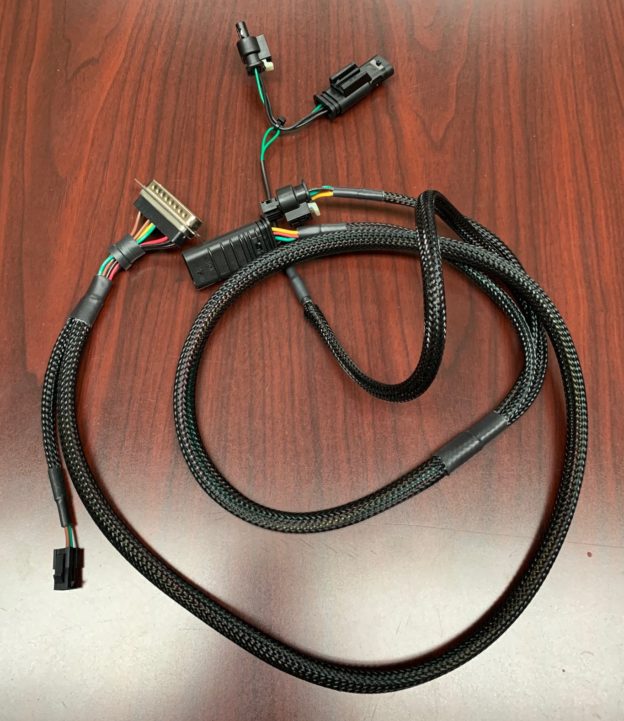
A wire harness is a method that incorporates several point-to-point cable assemblies together into one conclusive assembly.  They are generally held together using cable ties or some form of protective sleeve used to protect the wires or cables from environmental conditions like moisture, heat or friction, and to organize the different breakouts for easy routing through a system or box build.

What Can Wire Harnesses be Used For?

Though you might confuse a wire harness for a cable assembly, there is one main difference and that is a wire harnesses usually contains several ends or breakouts, running in different directions, serving multiple functions with multiple terminations on each breakout.

A custom wire harness can be used in durable goods like household appliances, in and around engines of all kinds – automobiles, buses, locomotives, trucks, and even planes.  Electronic equipment, construction machinery, industrial equipment, HVAC products all use wire harnesses as well.

Located in Carson, California, ACME PCB Assembly utilizes top of the line technology from Schleuniger to perfectly cut, strip, and process any wire or cable you need. After 27 plus years in the business, ACME PCB Assembly has the experience to be your contract manufacturer for cable & wire harness projects. As an IPC-A-610 certified assembler with a certified trainer in house, you can be rest assured the cables and wires that come out of ACME will exceed the standards.

ACME PCB Assembly offers Wire harness Services Contact Us.

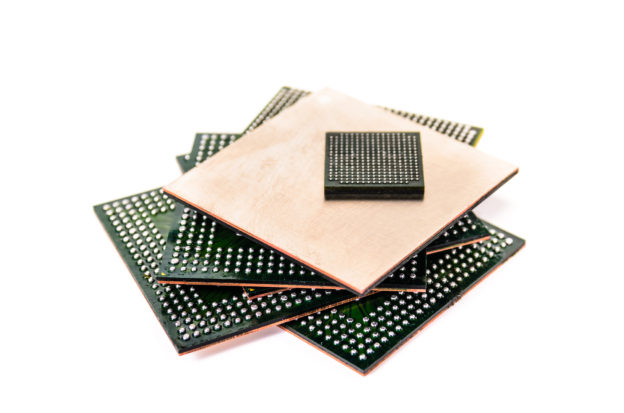
Processor with ball BGA pins

BGA Board Assembly, Rework and Modifications

BGA rework, replacement. Board Assembly uses the most powerful tools to maintain the state-of-the-art production. 

Performance may suffer in mass produced Ball Grid Array (BGA) devices due to many different reasons.  Defects in the device, lack of or excess solder joints, or oversights during upgradation processes can be included as one of the may reasons for performance issues.  These irregularities can be resolved with BGA rework. We provide a comprehensive BGA rework and re-balling services to maintain the efficacy of SMT circuit boards.

8,000 W medium wavelength IR heater measuring 500 mm x 625 mm. The IR/PL 650 XL is Ersa‘s flagship machine for extra large printed circuit boards (PCBs). PCBs up to 20″ x 24″ or 500 mm x 625 mm can now be safely and rapidly reworked. 

Soldering of BGA devices requires precise control and is usually done by automated processes. BGA devices are not suitable for socket mounting.

Board Assembly began offering Ball Grid Array (BGA) Assembly services in the early 90s. Over these many year’s experience BGA assembly with X Ray inspection machine, right assembly procedure, we are very confident to say that we know, and we can build a high quality, good yield rate BGA assembly board.

Ball grid array packaging is a method for reducing package size and integrating a greater number of functions on a single chip module. BGA (Ball Grid Array) also replaces solder balls on the component underside for SMT mounting. Our assembly capabilities include BGA assembly and rework up to 65mm squared up to 36 layer printed circuit board.

BGA (Ball Grid Array) board assembly, rework, and modifications are common processes in electronics manufacturing and repair. Here’s an overview of each process:

  1. BGA Board Assembly:
    • BGA assembly involves mounting BGA components onto a PCB (Printed Circuit Board). BGAs have solder balls beneath the component that are used to make connections to the PCB.
    • The assembly process typically involves solder paste deposition onto the PCB pads, placement of the BGA component onto the pads, and reflow soldering to melt the solder and create electrical connections.
    • Proper alignment, solder paste application, and reflow profiles are critical for successful BGA assembly.
  2. BGA Rework:
    • BGA rework is necessary when there are defects in the initial BGA assembly, such as insufficient solder, solder bridges, or misalignment.
    • Rework can involve the removal of the faulty BGA component using specialized equipment like a rework station or reflow oven. This process often requires careful heating to avoid damaging the PCB or surrounding components.
    • After removal, the site is cleaned, and fresh solder paste may be applied if necessary. Then, a new BGA component is placed and reflow soldered.
  3. BGA Modifications:
    • BGA modifications are changes made to the BGA components or PCB after the initial assembly process.
    • This can include upgrading components, changing the BGA footprint, or adding/removing features on the PCB.
    • Modifications may involve removing existing components, adding new ones, cutting traces, or making changes to the PCB layout.
    • Care must be taken to ensure that modifications do not adversely affect the functionality or reliability of the circuit.

Common tools and equipment used in BGA assembly, rework, and modifications include:

  • Reflow ovens: Used for melting solder paste to create electrical connections during initial assembly and rework.
  • Rework stations: Equipped with heating elements and hot air nozzles for precise heating during BGA removal and placement.
  • Soldering irons: Used for touch-up soldering and fine-detail work.
  • Flux: Used to aid in soldering and rework by improving wetting and preventing oxidation.
  • Solder paste dispensers: Used for applying solder paste to PCB pads before BGA placement.
  • Inspection equipment: Including magnifying glasses, microscopes, and X-ray machines for inspecting solder joints and connections.

BGA assembly, rework, and modifications require skill, experience, and attention to detail to ensure the reliability and functionality of electronic devices.

Contact Us for more information.

Printed circuit board production

Surface Mount Technology (SMT) vs. Through-Hole Technology: Pros and Cons

In the ever-evolving world of electronics manufacturing, choosing the right assembly method is crucial for optimizing both performance and cost-efficiency. Two prominent techniques in this realm are Surface Mount Technology (SMT) and Through-Hole Technology. Each has its own advantages and drawbacks, making it essential to understand their unique characteristics and applications.

Printed circuit board productionSurface Mount Technology (SMT) has become the industry standard due to its efficiency and versatility. SMT involves mounting electronic components directly onto the surface of printed circuit boards (PCBs). This method significantly enhances the automation potential, allowing for high-speed production and reduced labor costs. The compact nature of SMT components enables the design of smaller and lighter devices, a crucial factor in modern electronics where space and weight are at a premium.

One of the key benefits of SMT is its superior performance in high-frequency applications. The reduced lead length in SMT components minimizes the parasitic inductance and capacitance, leading to better signal integrity and faster operational speeds. This makes SMT the preferred choice for complex and high-speed circuits commonly found in telecommunications, computing, and consumer electronics.

However, SMT is not without its challenges. The smaller component size can make manual handling and inspection difficult, necessitating advanced automated inspection systems. Additionally, SMT components are generally less robust in terms of mechanical strength compared to their through-hole counterparts, which can be a consideration in applications subject to high mechanical stress.

On the other hand, Through-Hole Technology has been a staple in the industry for decades. This method involves inserting component leads through pre-drilled holes in the PCB and soldering them on the opposite side. The primary advantage of through-hole technology is its mechanical stability. The strong solder joints created by this method are highly reliable, making it ideal for applications where durability and longevity are paramount.

Through-hole technology also excels in high-power and high-voltage applications. The robust nature of the components allows them to handle greater electrical currents, making through-hole technology indispensable in industries such as automotive, aerospace, and industrial equipment. Additionally, through-hole components are easier to handle and inspect manually, which can be beneficial for prototyping and low-volume production.

Despite its strengths, through-hole technology has its limitations. The manual insertion process is labor-intensive and time-consuming, leading to higher production costs and longer assembly times. The requirement for drilled holes also reduces the available space on the PCB for routing signals, potentially limiting design flexibility and increasing the board size.

In conclusion, the choice between SMT and through-hole technology depends on the specific requirements of your project. For high-speed, high-density, and cost-sensitive applications, SMT offers unparalleled advantages. Conversely, for high-reliability, high-power, and mechanically robust applications, through-hole technology remains a superior choice. Understanding the pros and cons of each method allows manufacturers to make informed decisions that align with their production goals and application needs.

For more detailed information on our SMT assembly services, visit our Surface Mount Technology Assembly page. Explore how we can help you leverage the strengths of SMT to achieve your project objectives.